Rice University O’Connor Engineering and Science Building / Houston, Texas
Inspiring Innovation
Introduction
The O’Connor Engineering and Science Building at Rice University is a dynamic hub for interdisciplinary research and academic exchange. Flexible, high-performance labs, active learning classrooms, faculty offices, and informal collaboration areas support evolving needs for research and teaching. A light-filled central hub with open lounges foster connectivity, while a top-floor event space and outdoor terrace offer sweeping views of the campus and Houston skyline.
Program: Laboratories and Offices
Site: University Campus Role: Project Design Lead while at SOM Phases: Programming to Construction Administration Status: Completed September 2023
All photos by Kenny Endo U.O.N.
Design Brief and Approach
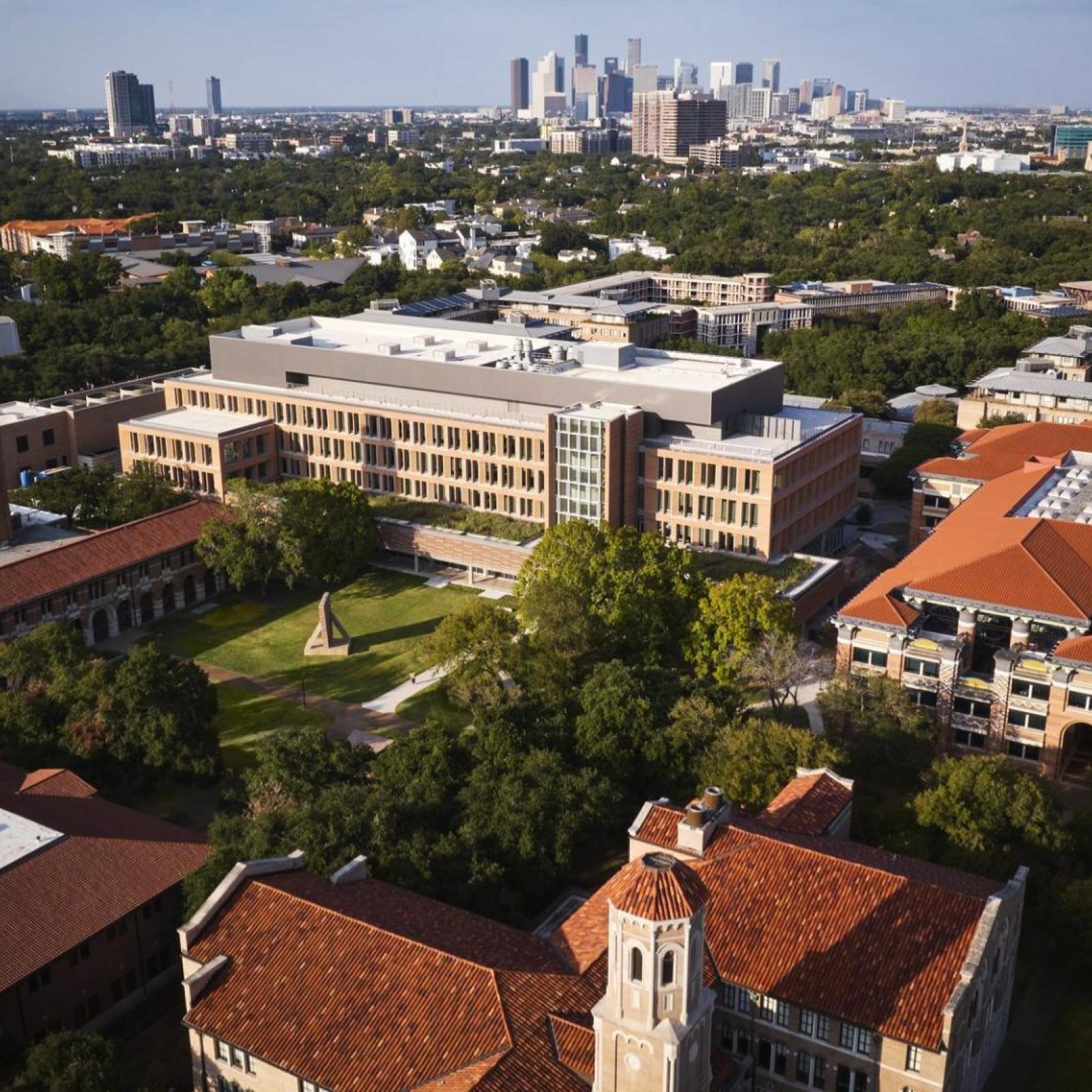
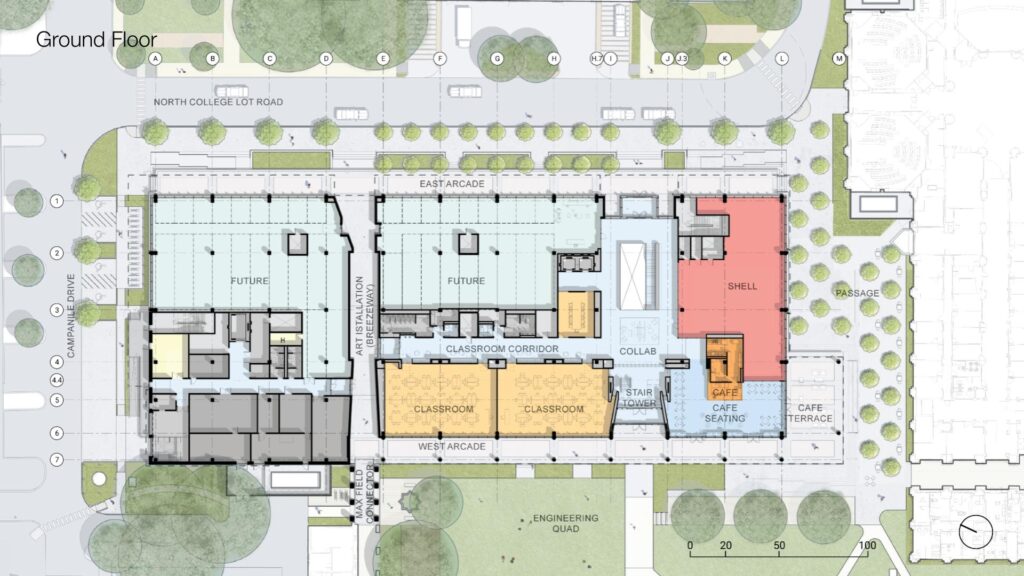
The university sought to consolidate its dispersed engineering and science departments into a single, cohesive facility to foster collaboration among students and faculty, revitalize the underutilized Engineering Quad, and provide an updated, flexible set of research and learning spaces. The design solution began by enhancing pedestrian circulation and creating a porous, transparent ground floor to strengthen connections between the academic and residential quads. This sense of activation continues vertically through a central space, concentrating interaction and collaboration to the lab and office levels above.
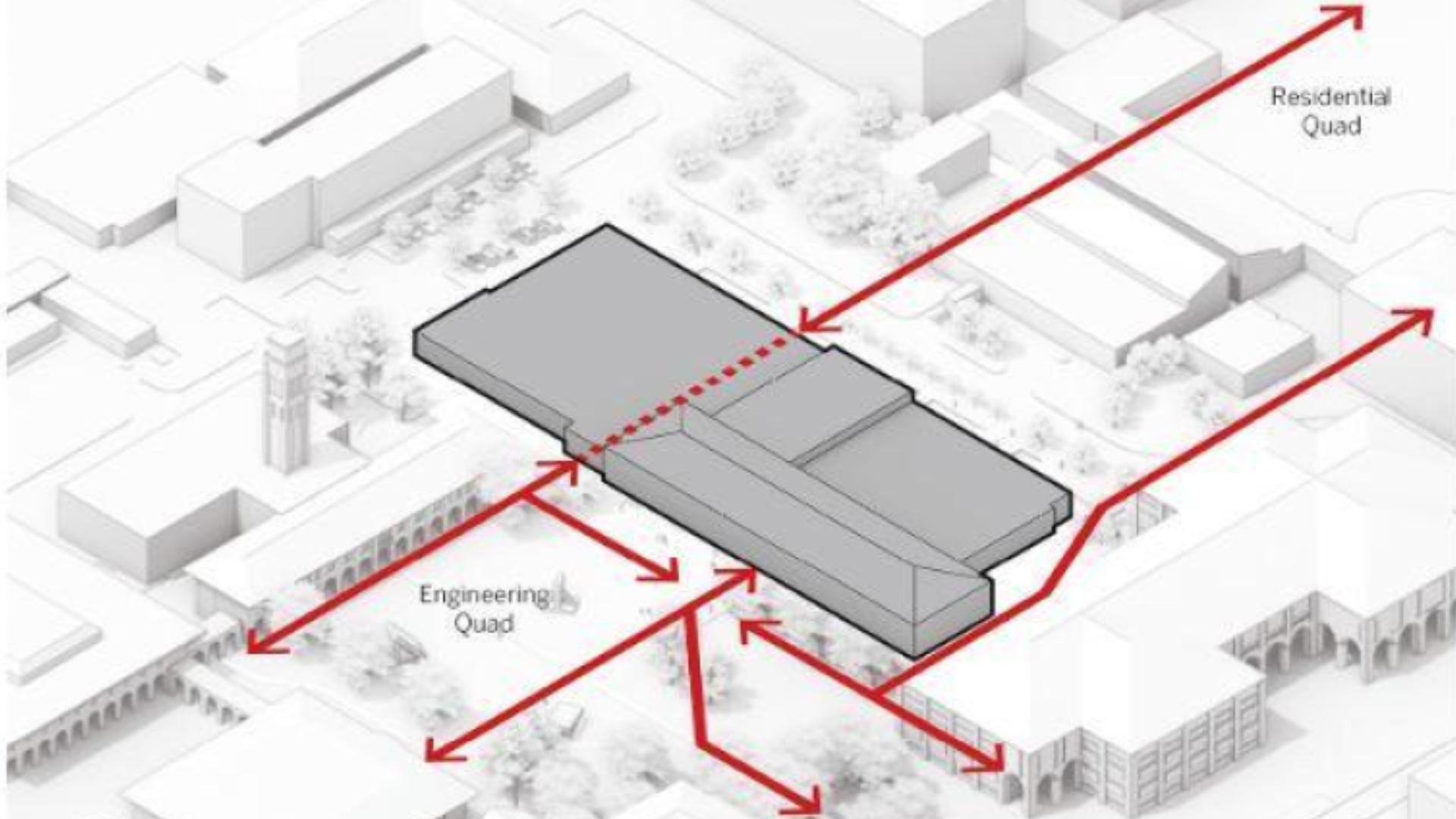
Original Condition: The former Abercrombie Building limited access between the Engineering and Residential Quads.
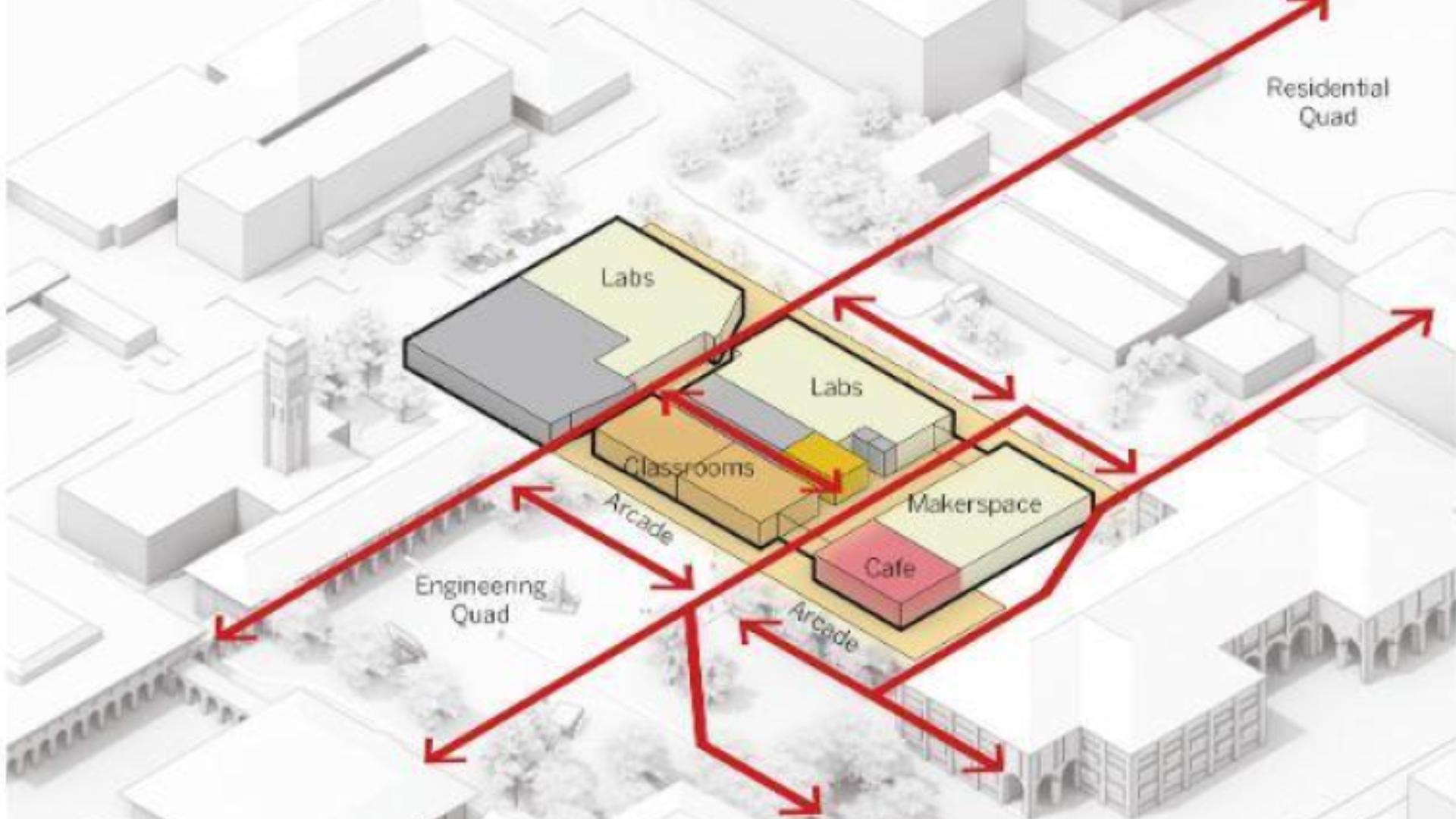
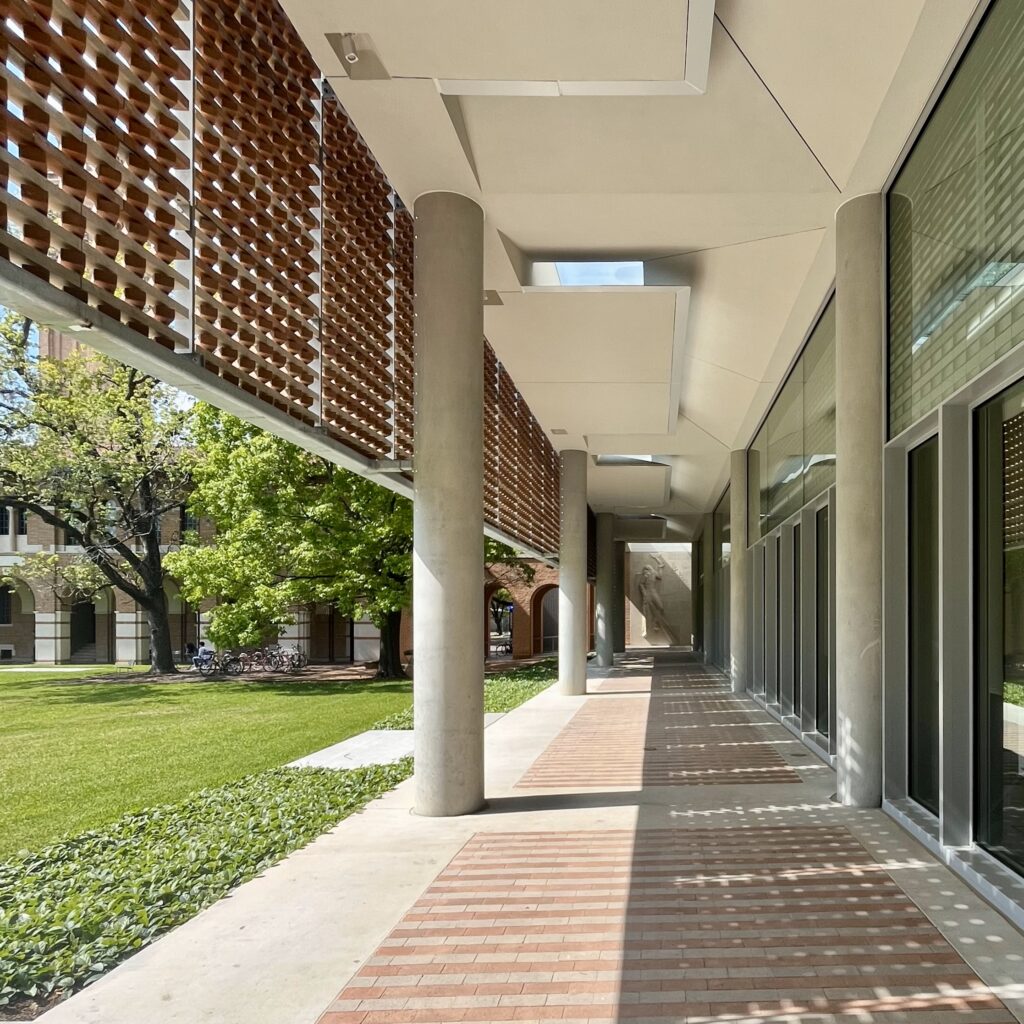
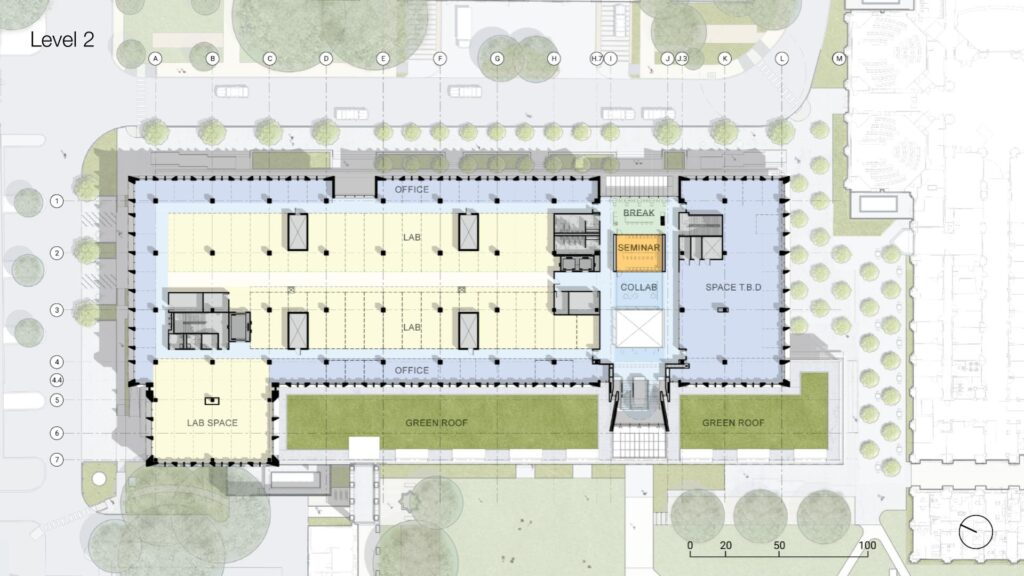
Active and Porous Ground Floor: The campus pedestrian network extends through the building to connect the East and West sides, reinforces the historic cadence along the Engineering Quad and provides a human-scaled perimeter arcade activated by flexible collaborative spaces.
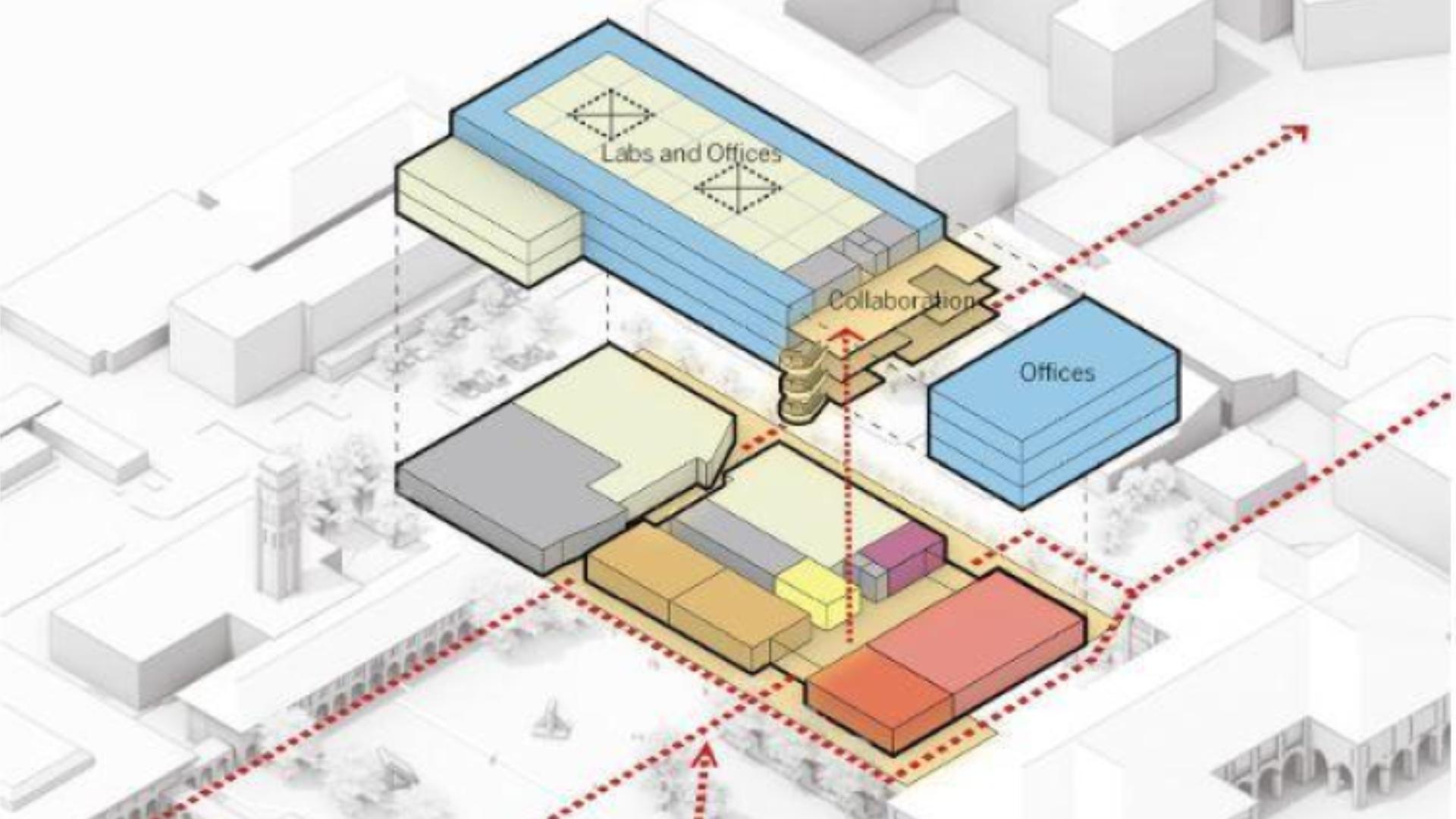
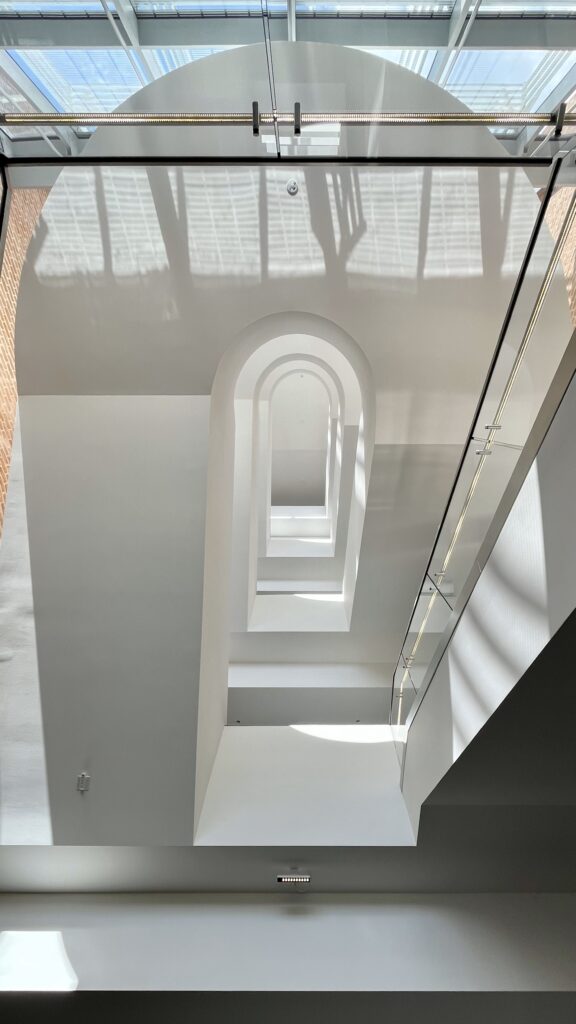
Efficient and Flexible Typical Floors: Typical lab floors are organized into efficient floor plates on a regular 32’ structural grid. A vertical connection extends the active and porous nature of the ground floor up to the typical floors.
Integrating to Context
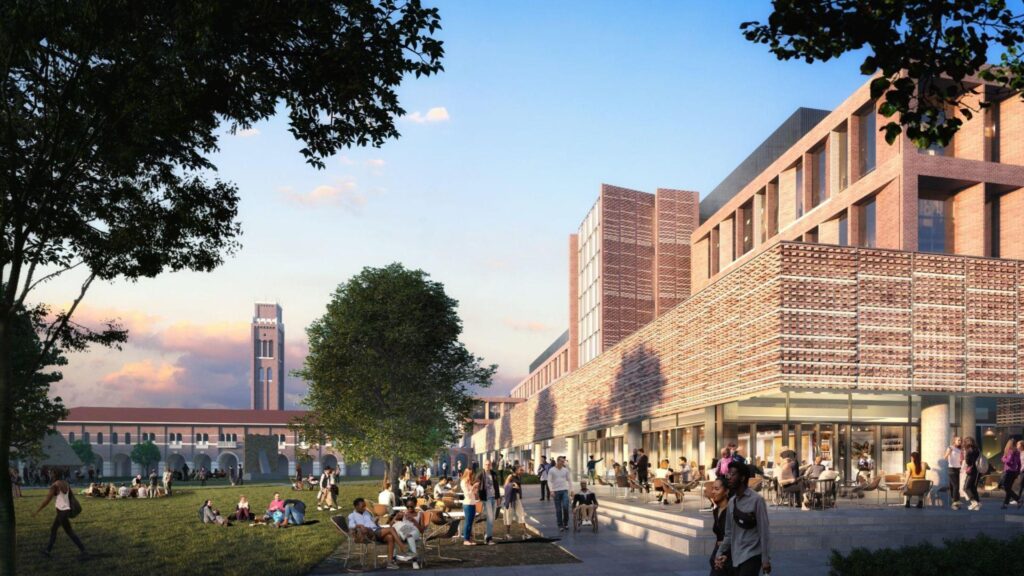
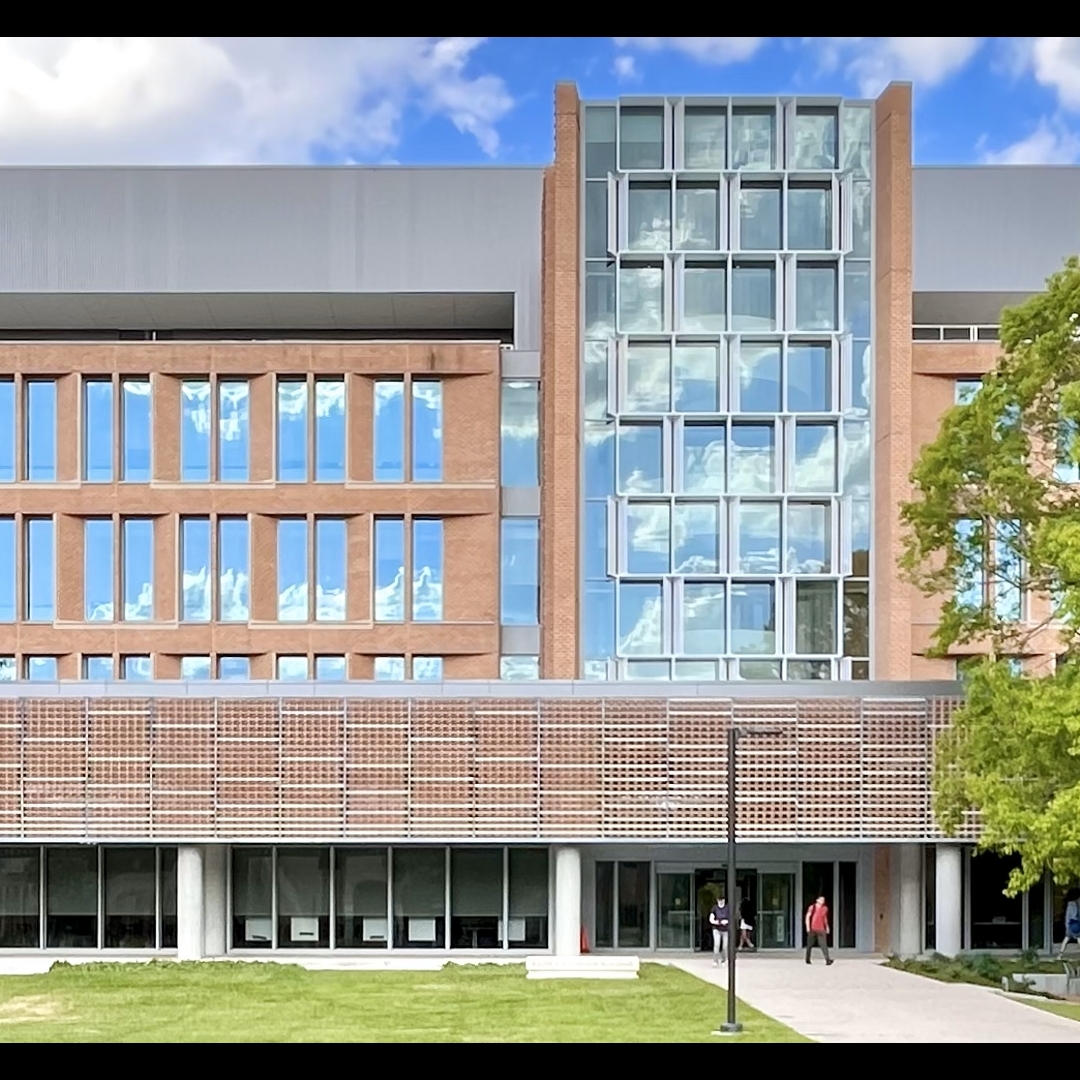
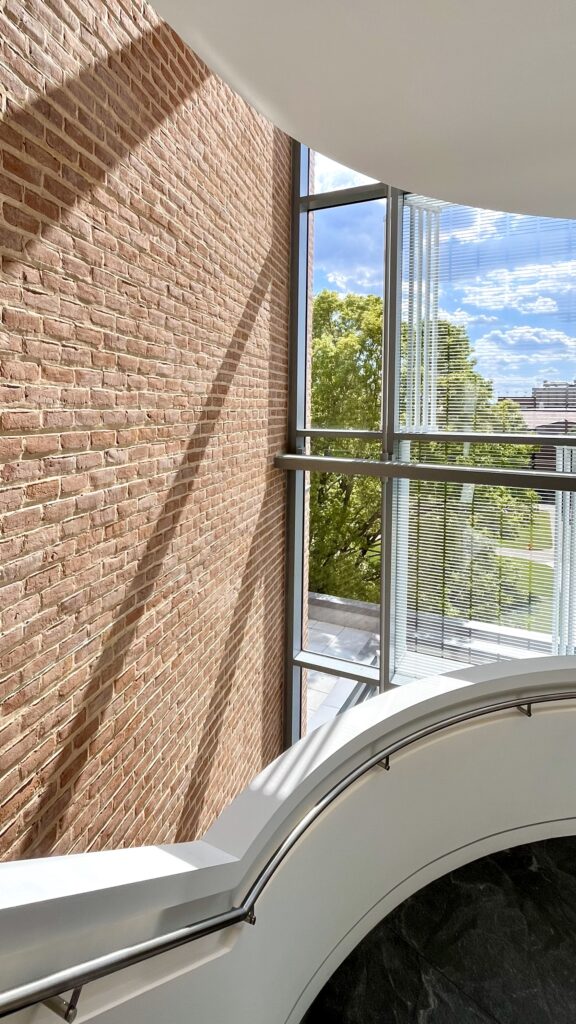
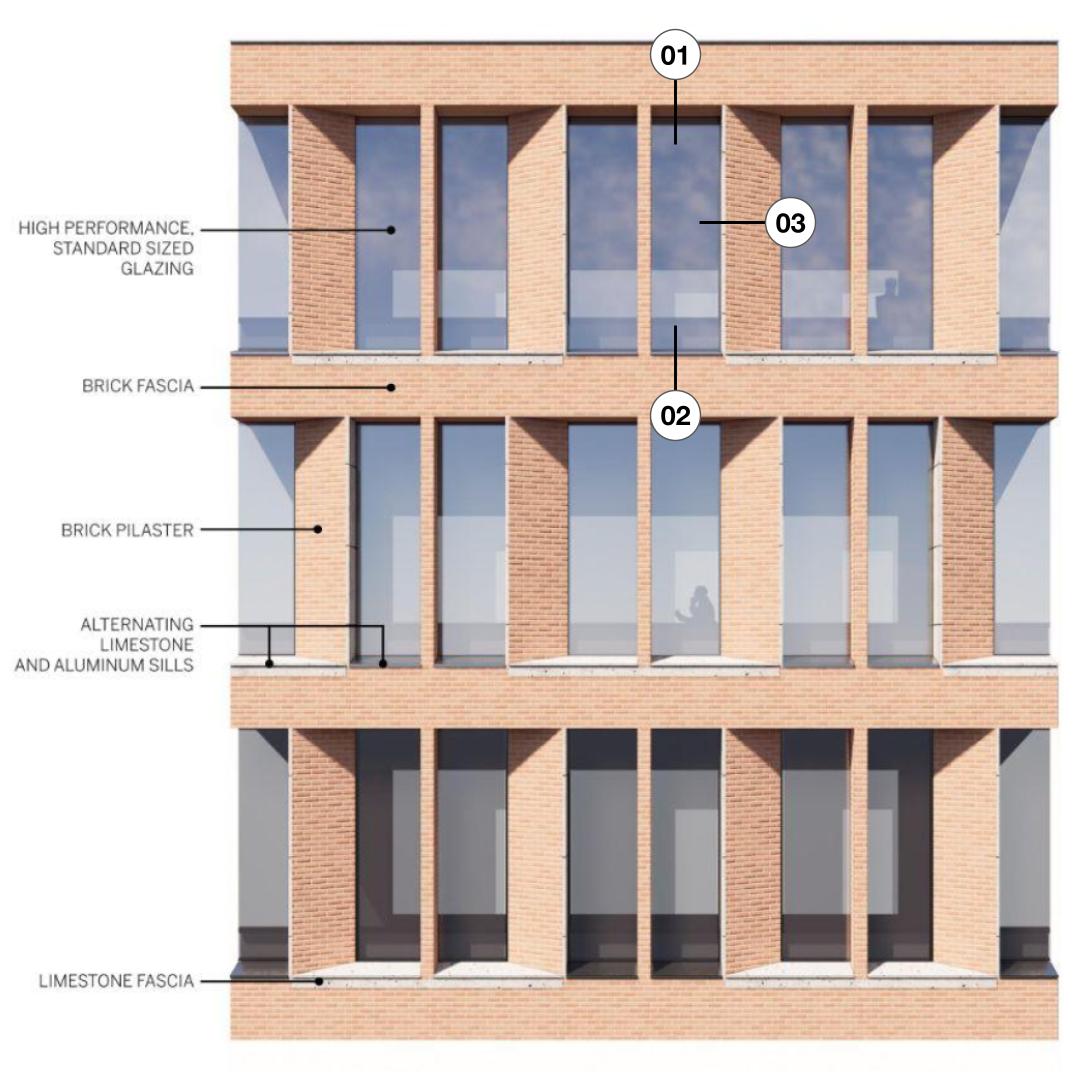
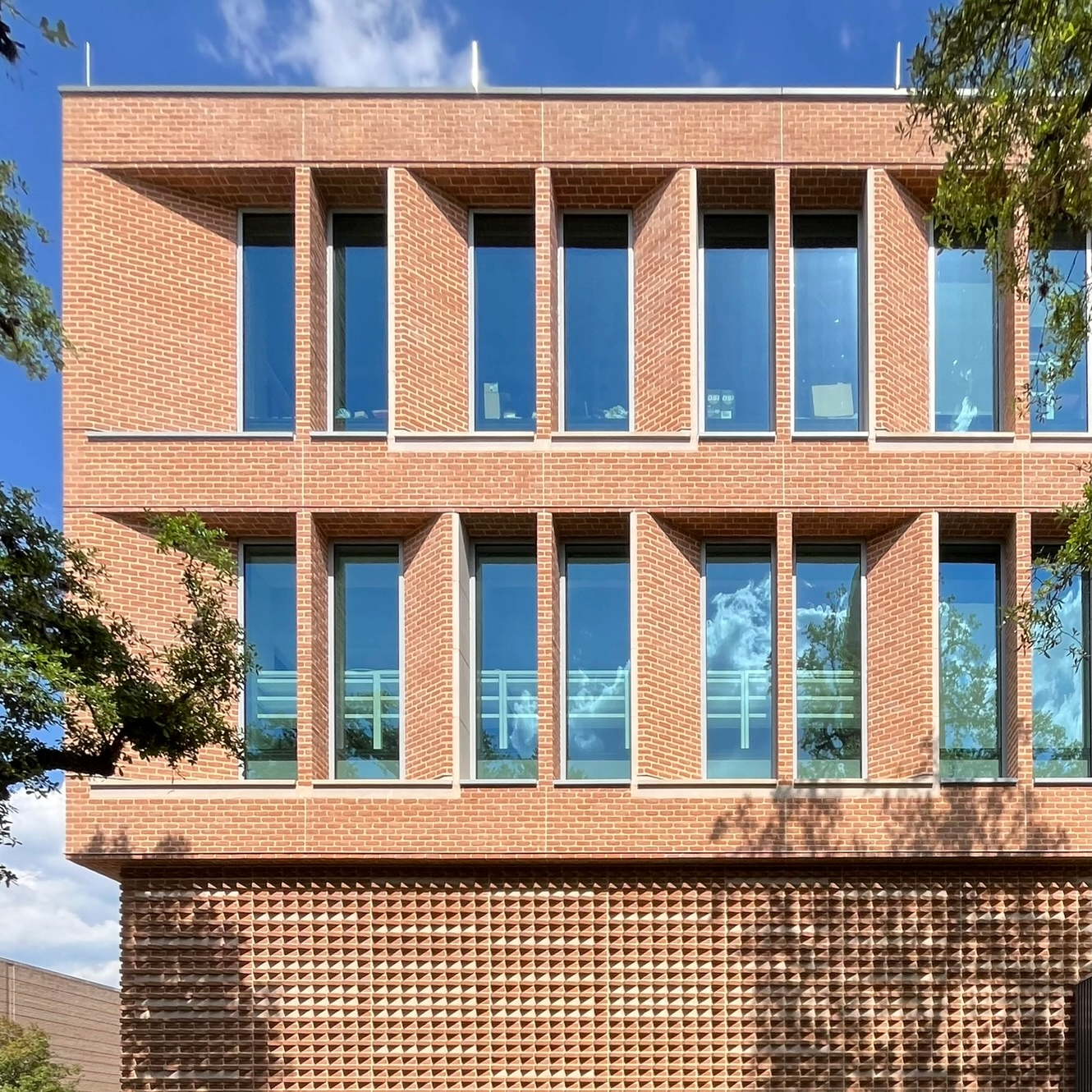
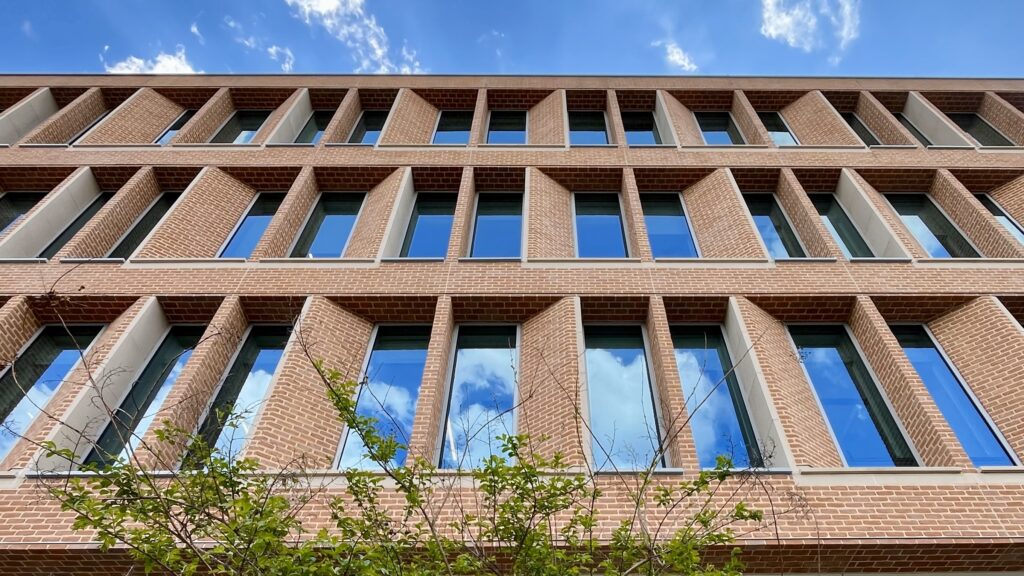
As the largest research facility on campus at 250,000 square feet, the building is thoughtfully integrated into Rice University’s historic core. Its massing steps down toward the Engineering Quad to maintain the pedestrian scale and character. Clad in the campus-standard “St. Joe’s” brick, the warm-toned masonry façade incorporates refined window proportions, reinforcing the cohesive architectural language of the university.
Photo by Dave Burk
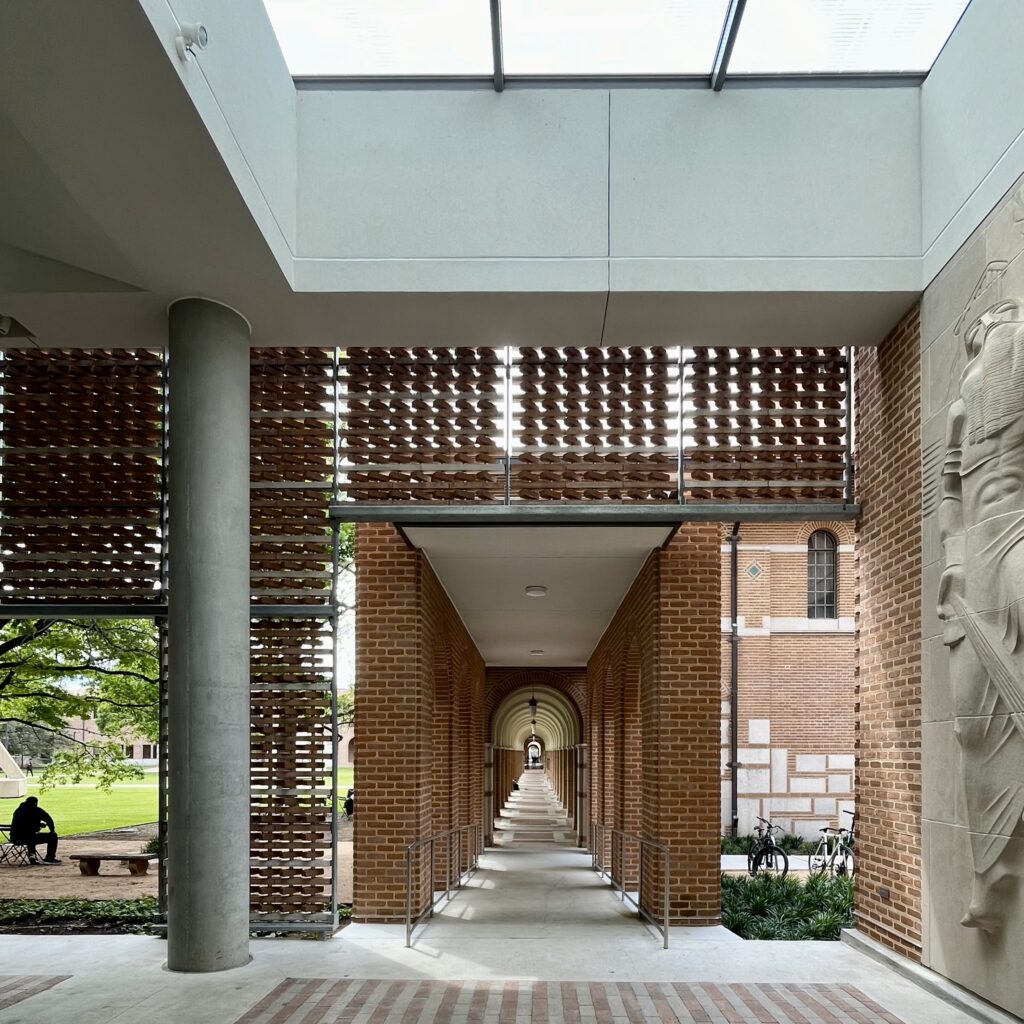
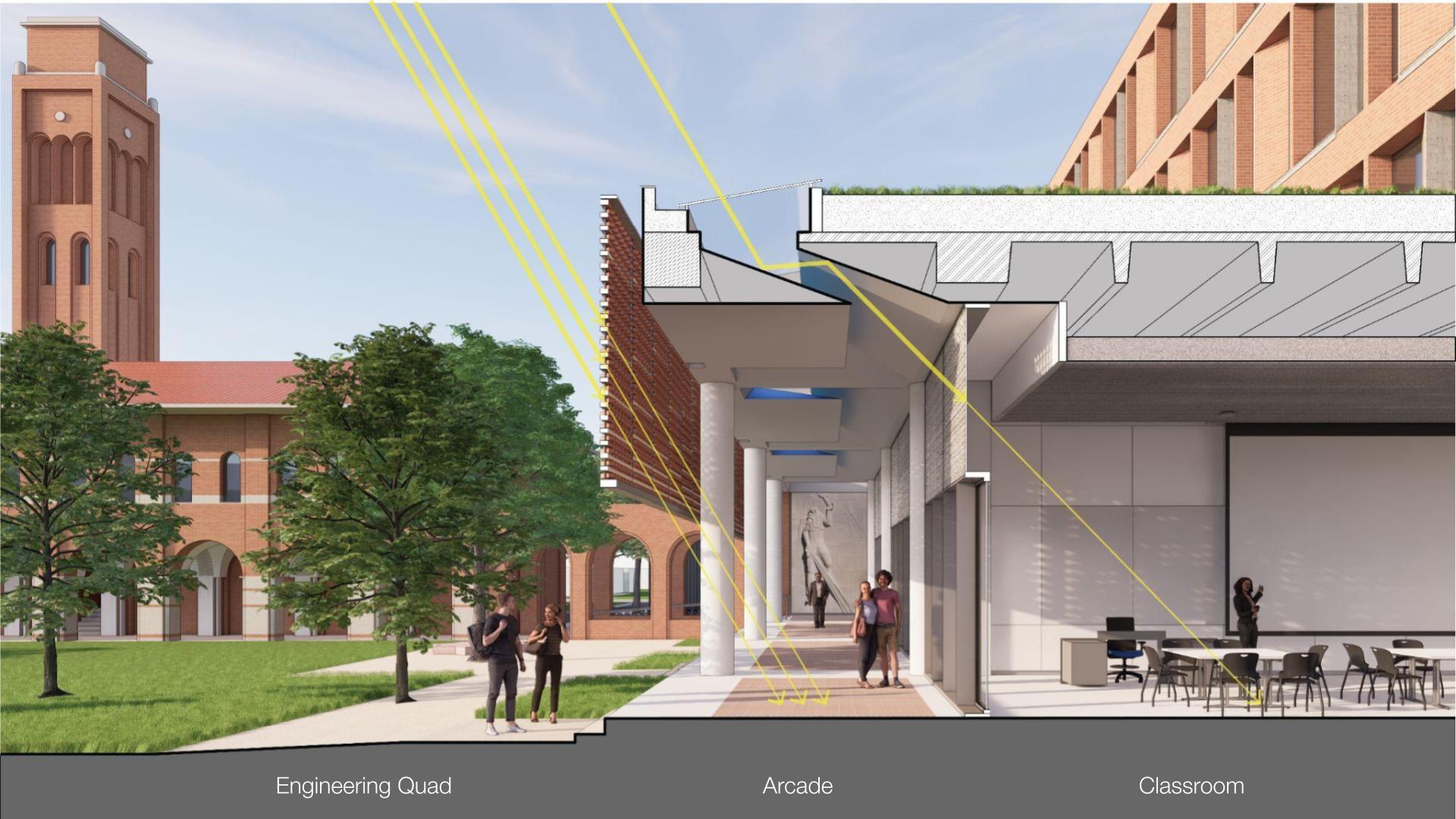
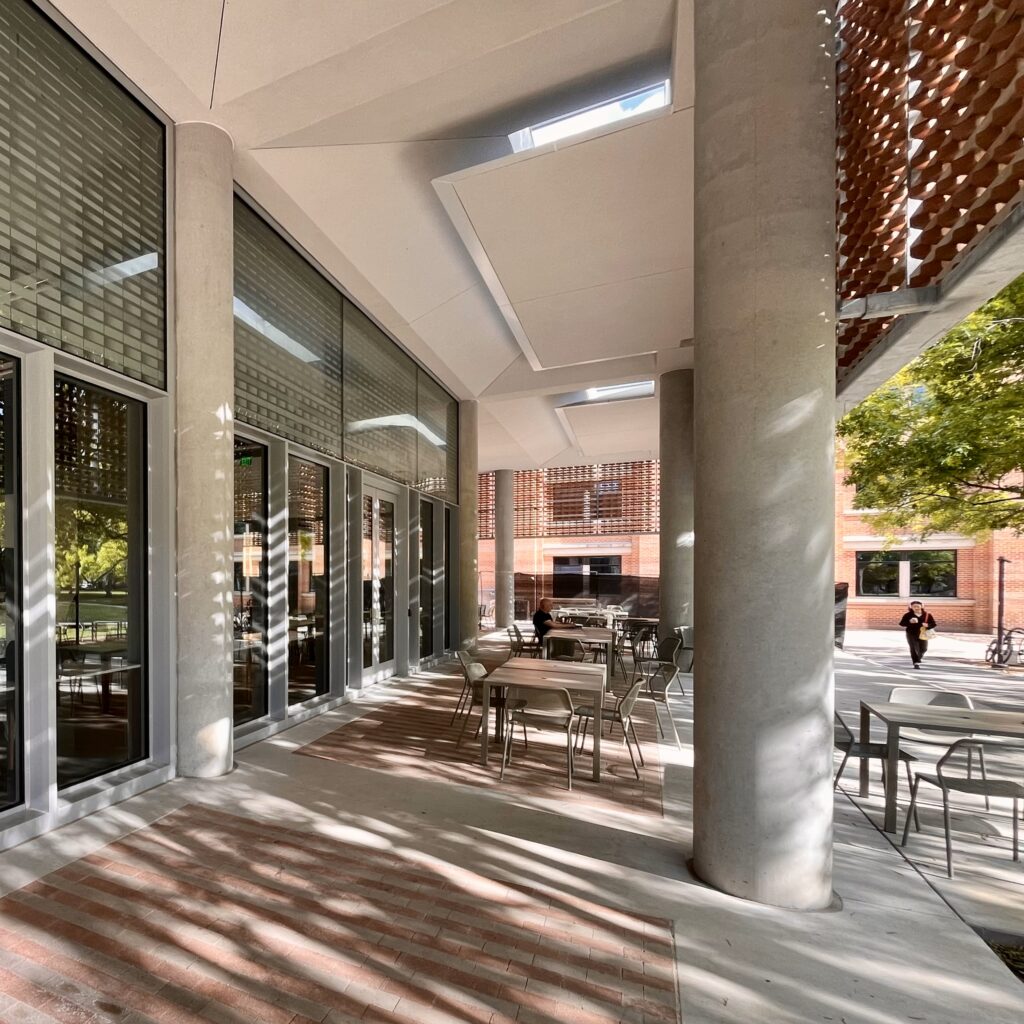
Shaded Exterior Arcade
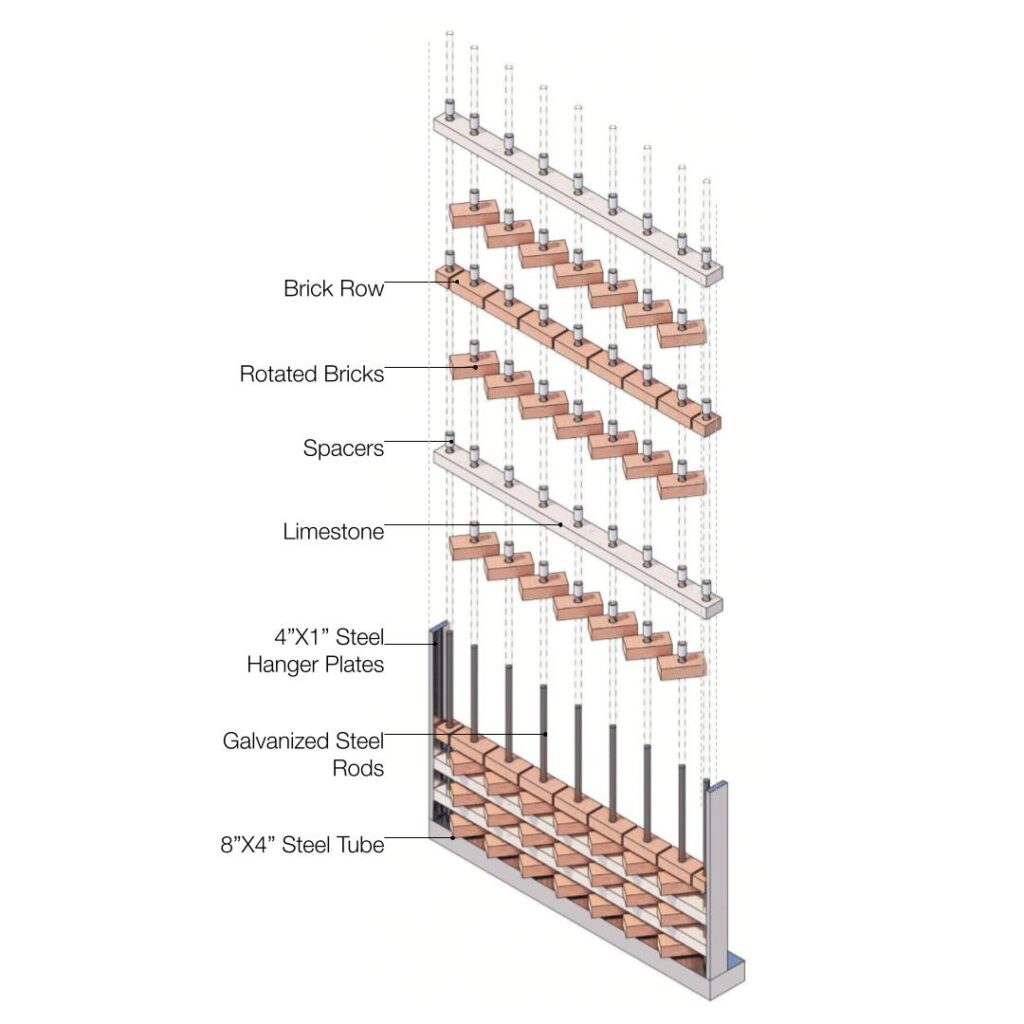
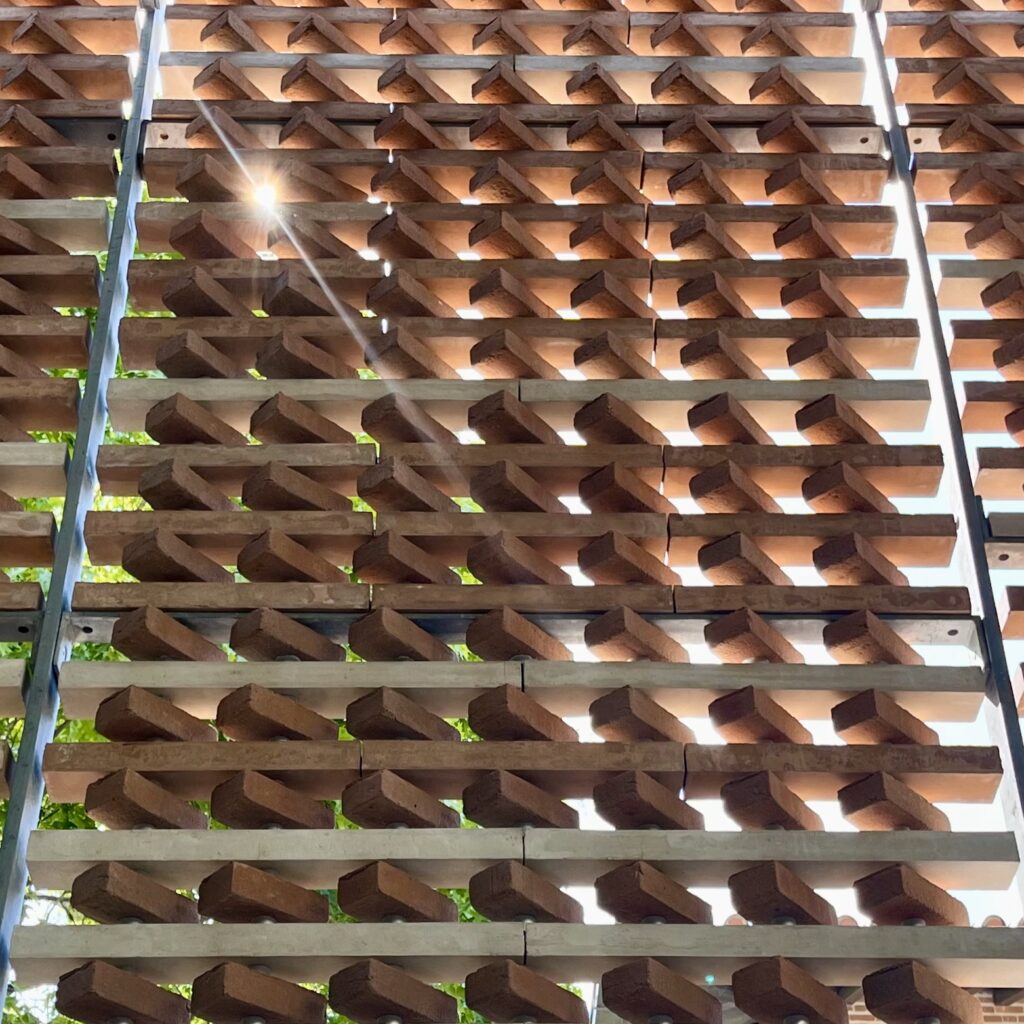
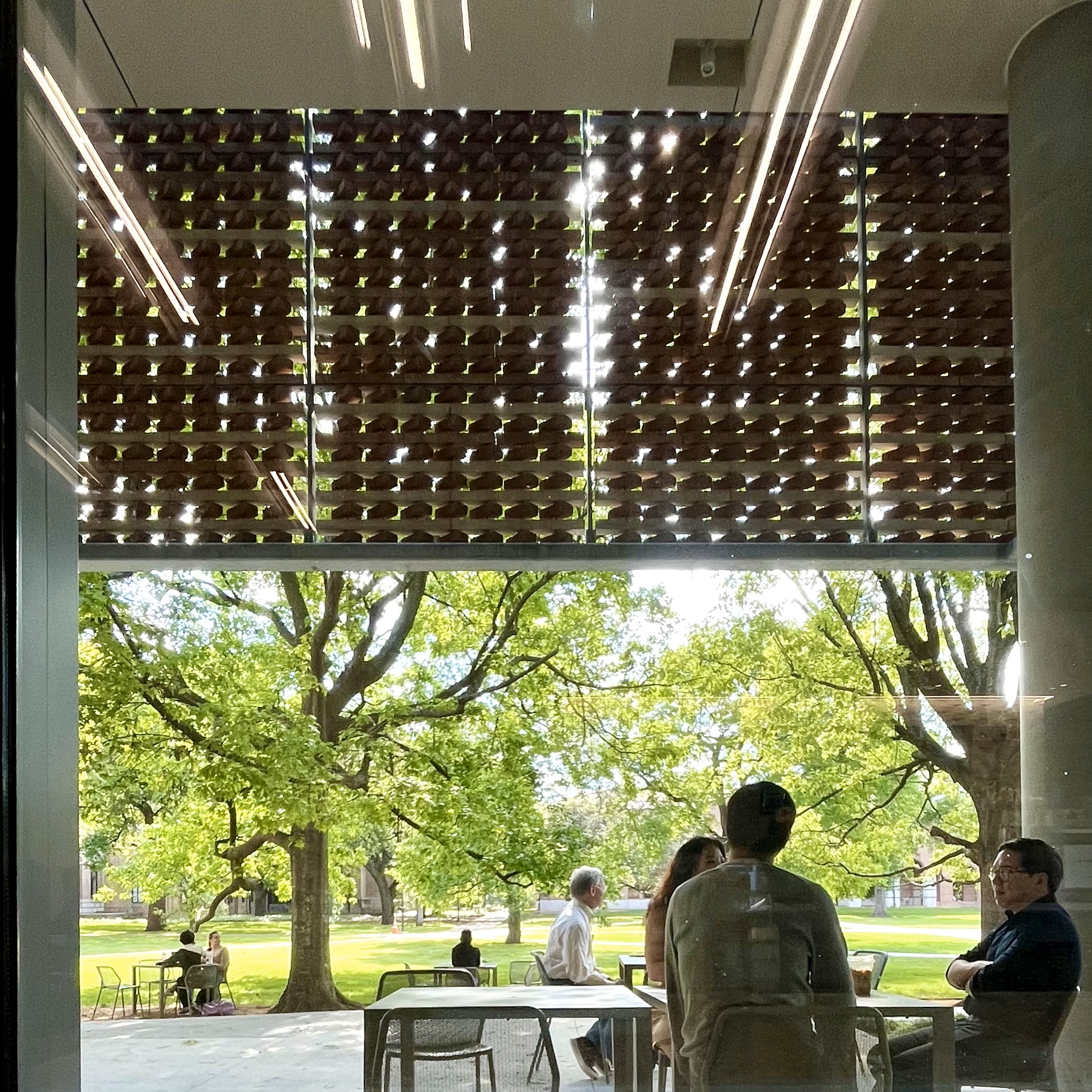
Extending the university’s iconic arcade network, an exterior walkway welcomes students and faculty with shaded views of the Engineering Quad. Along this path, a delicate “Brick Veil” filters the intense Texas sun, providing both thermal and visual comfort while reducing solar heat gain at the ground-level storefronts. Composed of alternating bands of brick and cast stone, the veil is composed of rotated bricks that create patterned openings, allowing dappled light and shadow activate the walkway and enrich the pedestrian experience.
The Central Hub
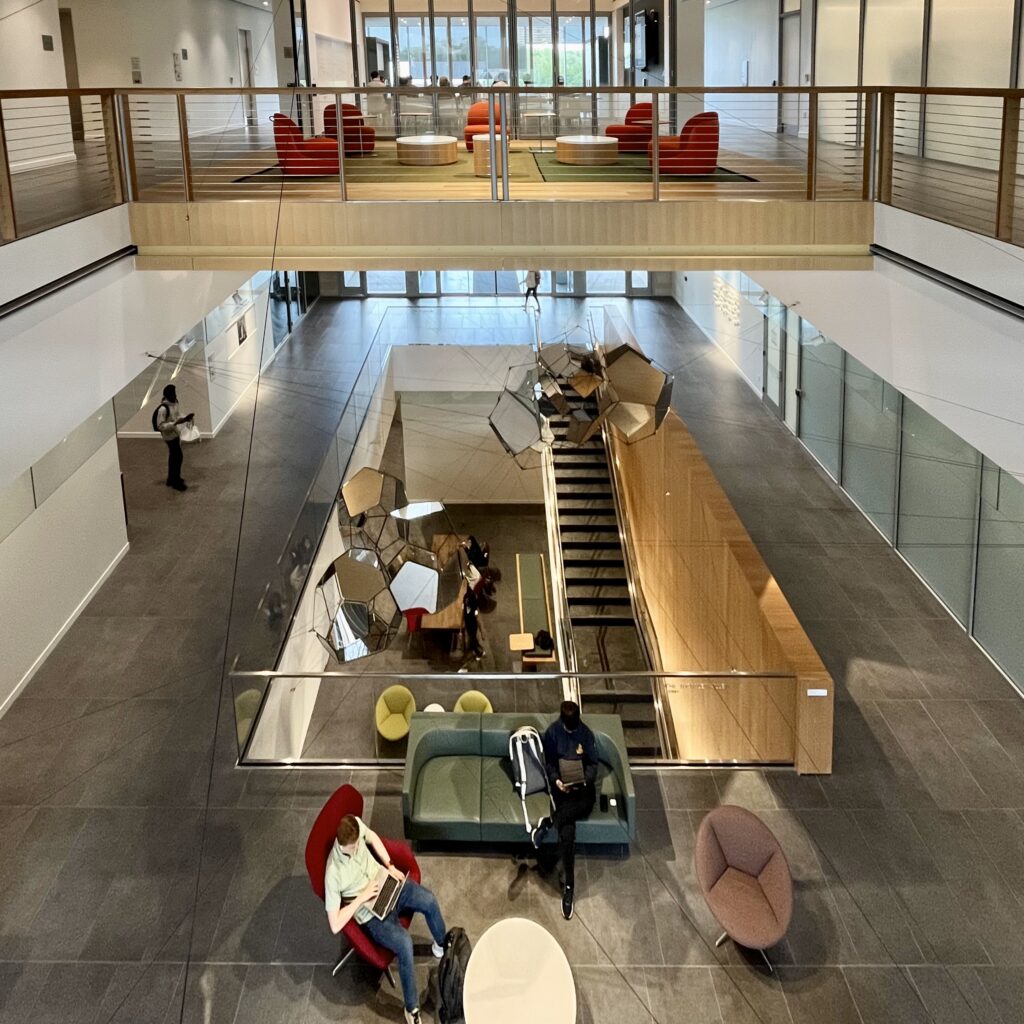
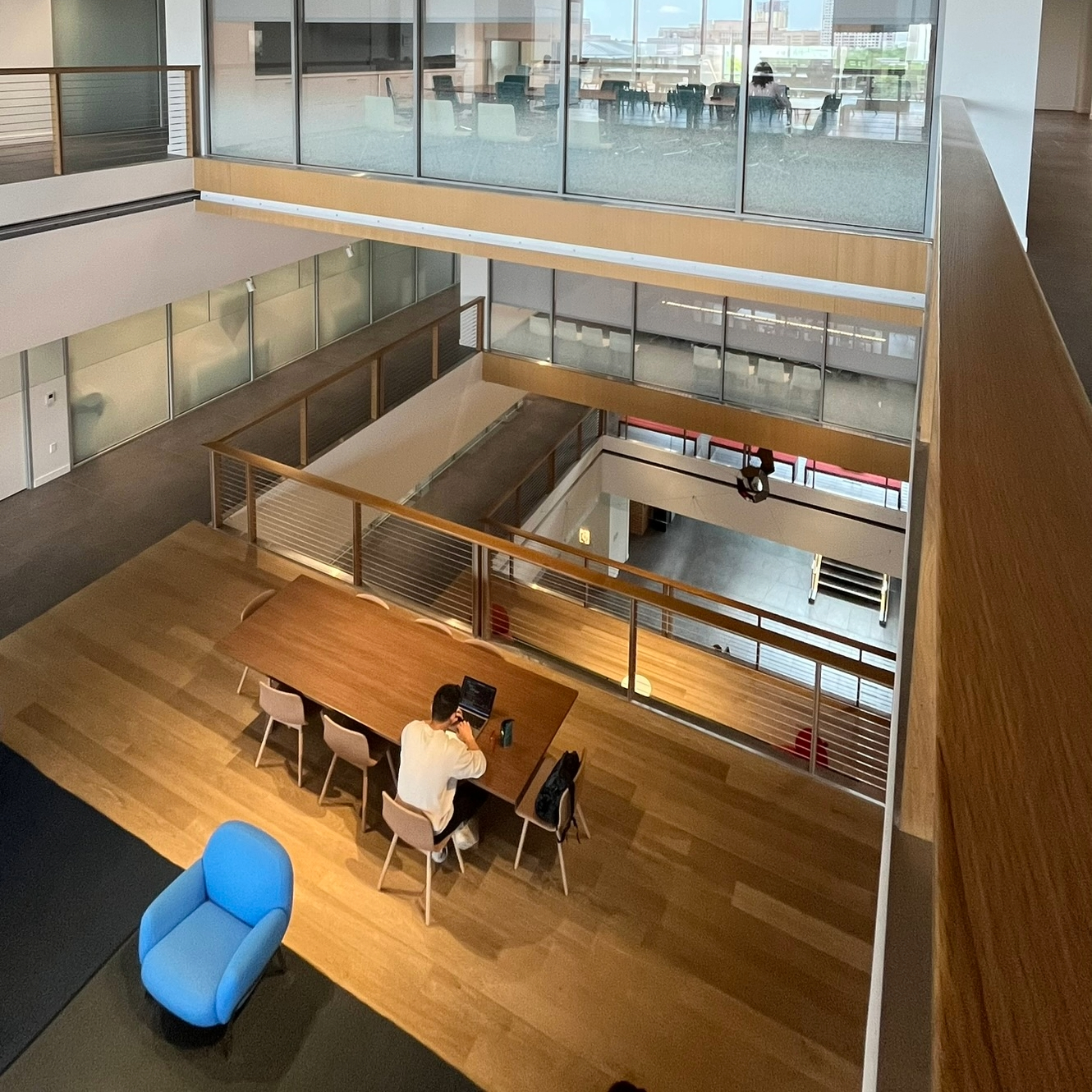
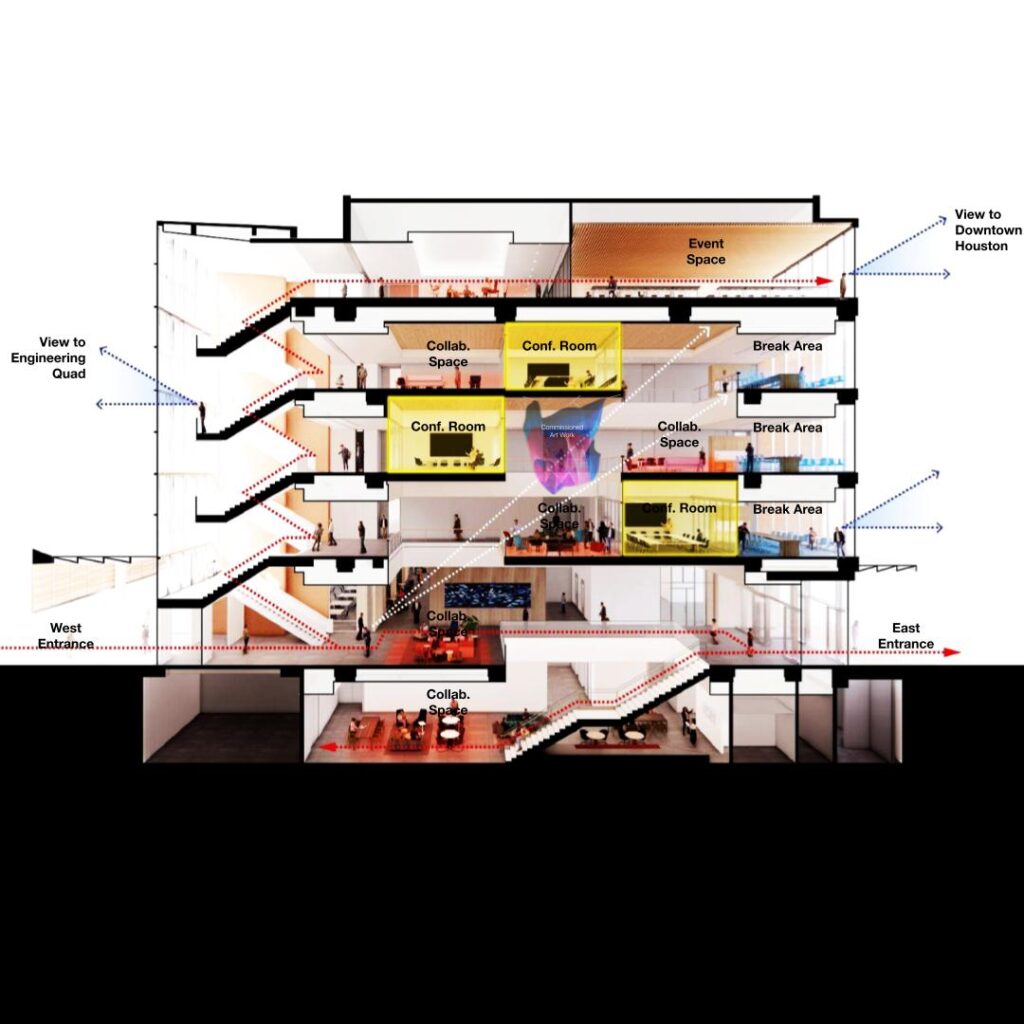
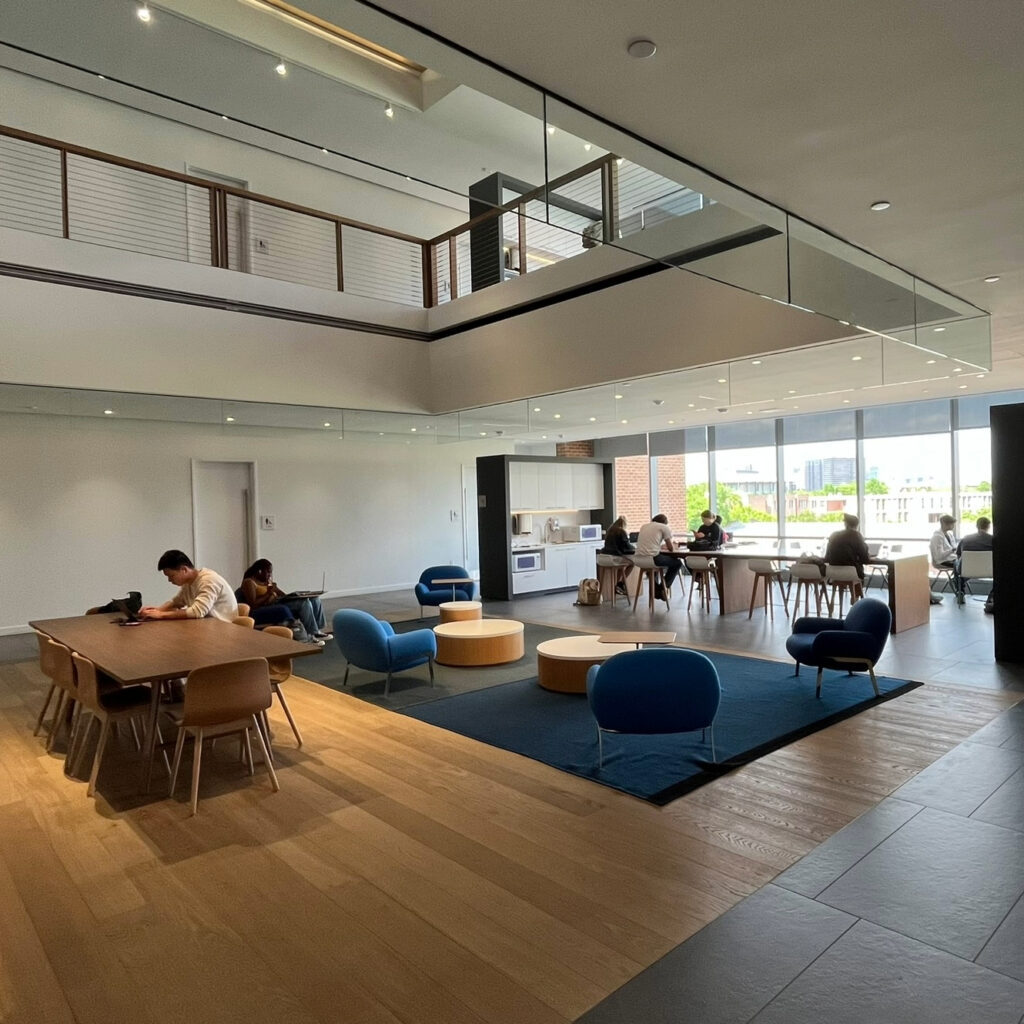
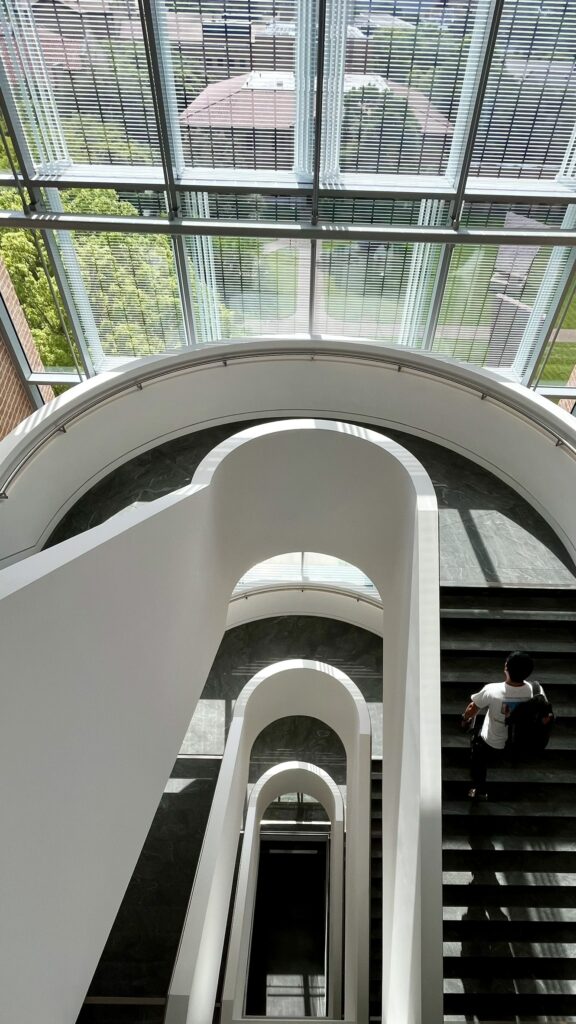
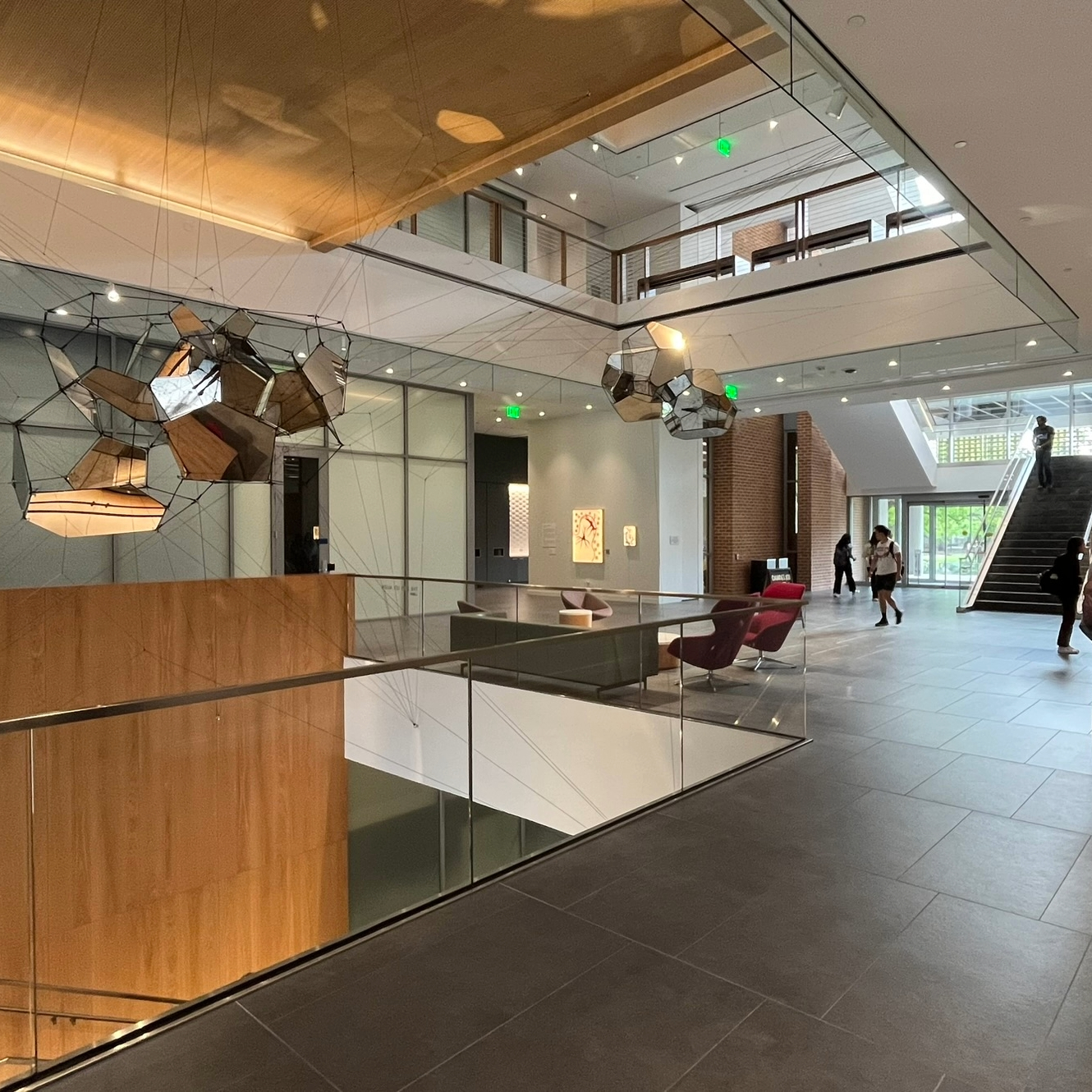
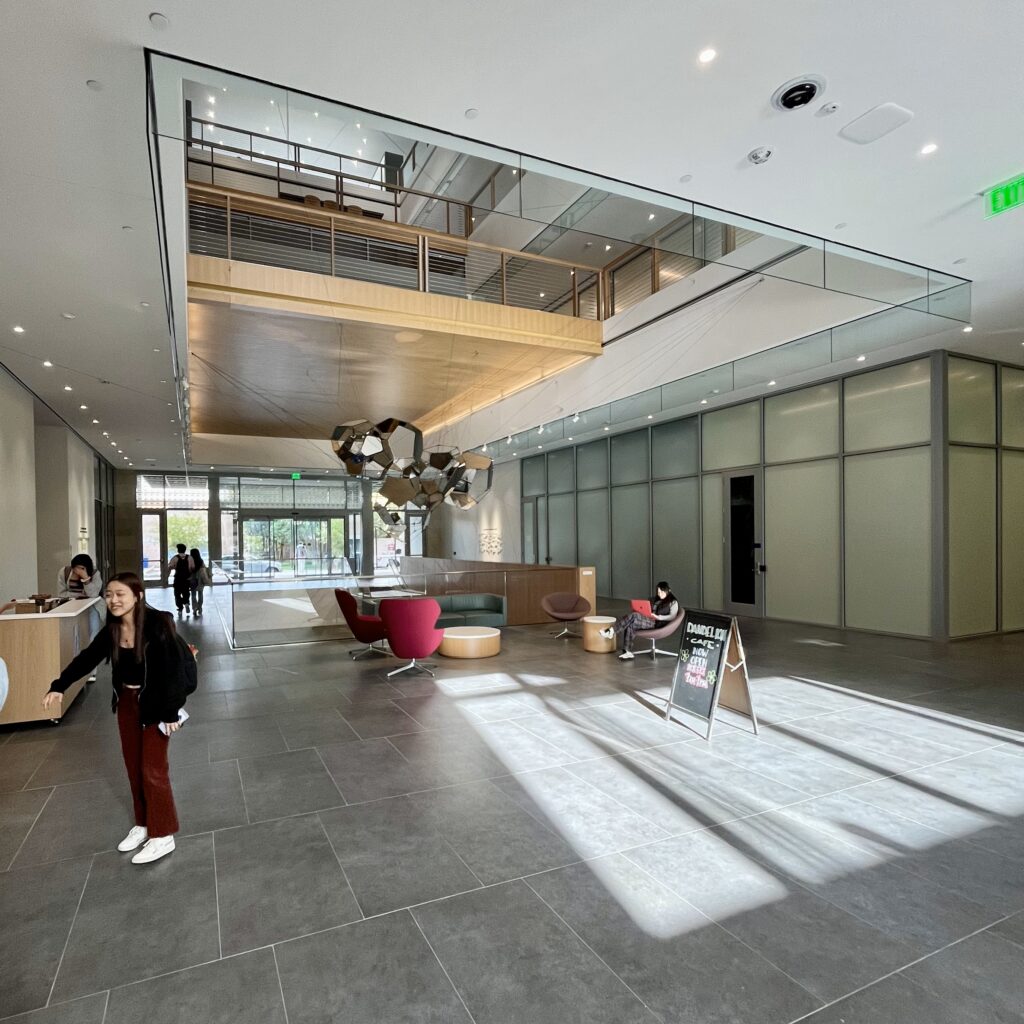
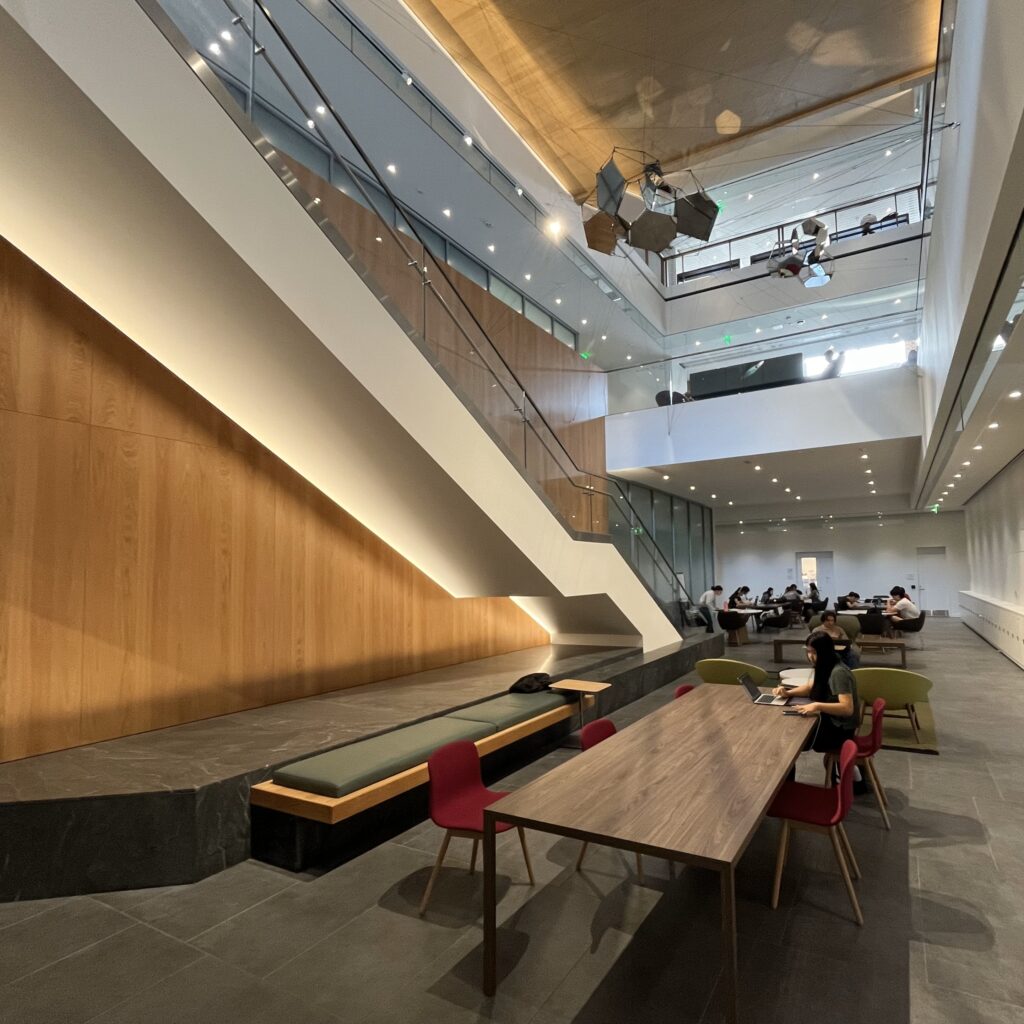
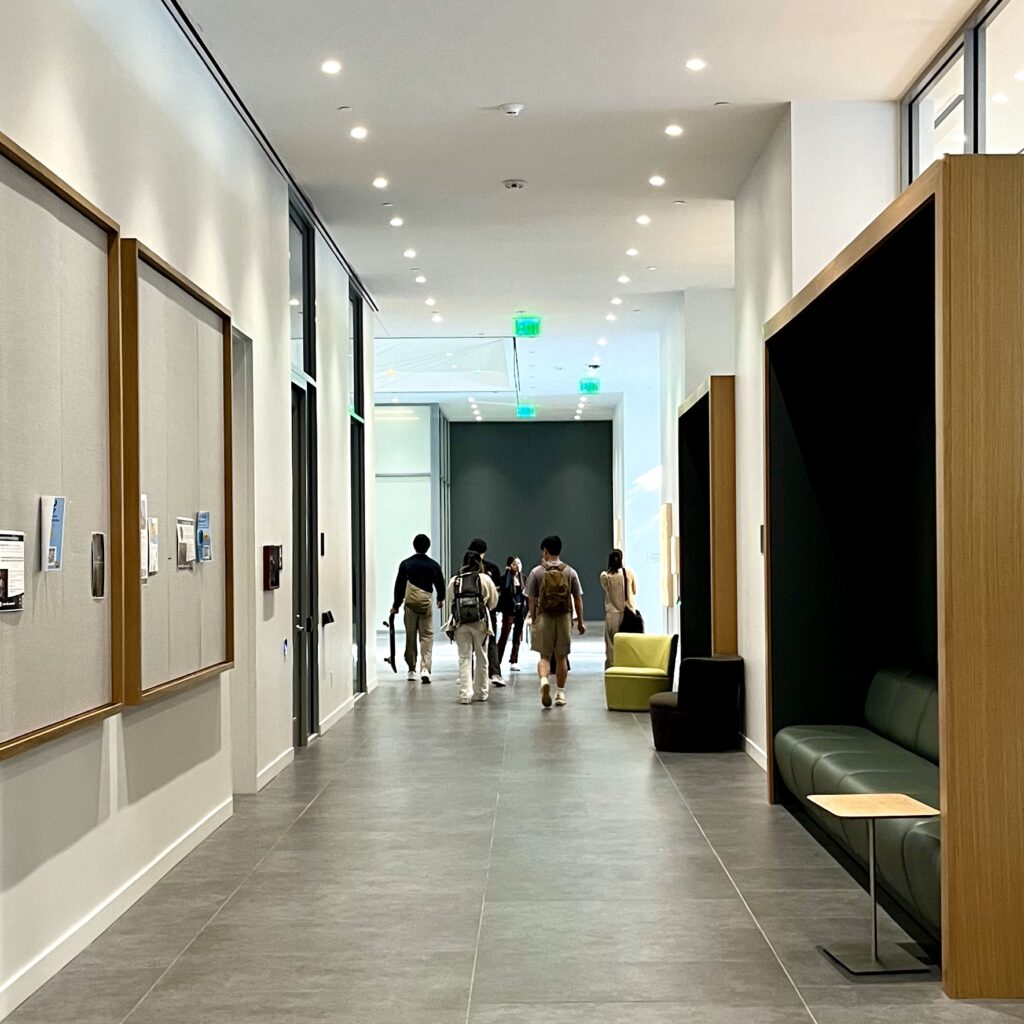
Recognizing that much of scientific discovery and dialogue happens outside the lab, the Central Hub provides areas for collaboration with formal and informal meeting spaces combined with break room functions for a rich, varied experience for individuals to work and come together. These spaces provide opportunities for chance encounters and casual conversation within a dynamic multi-story space in the heart of the building.
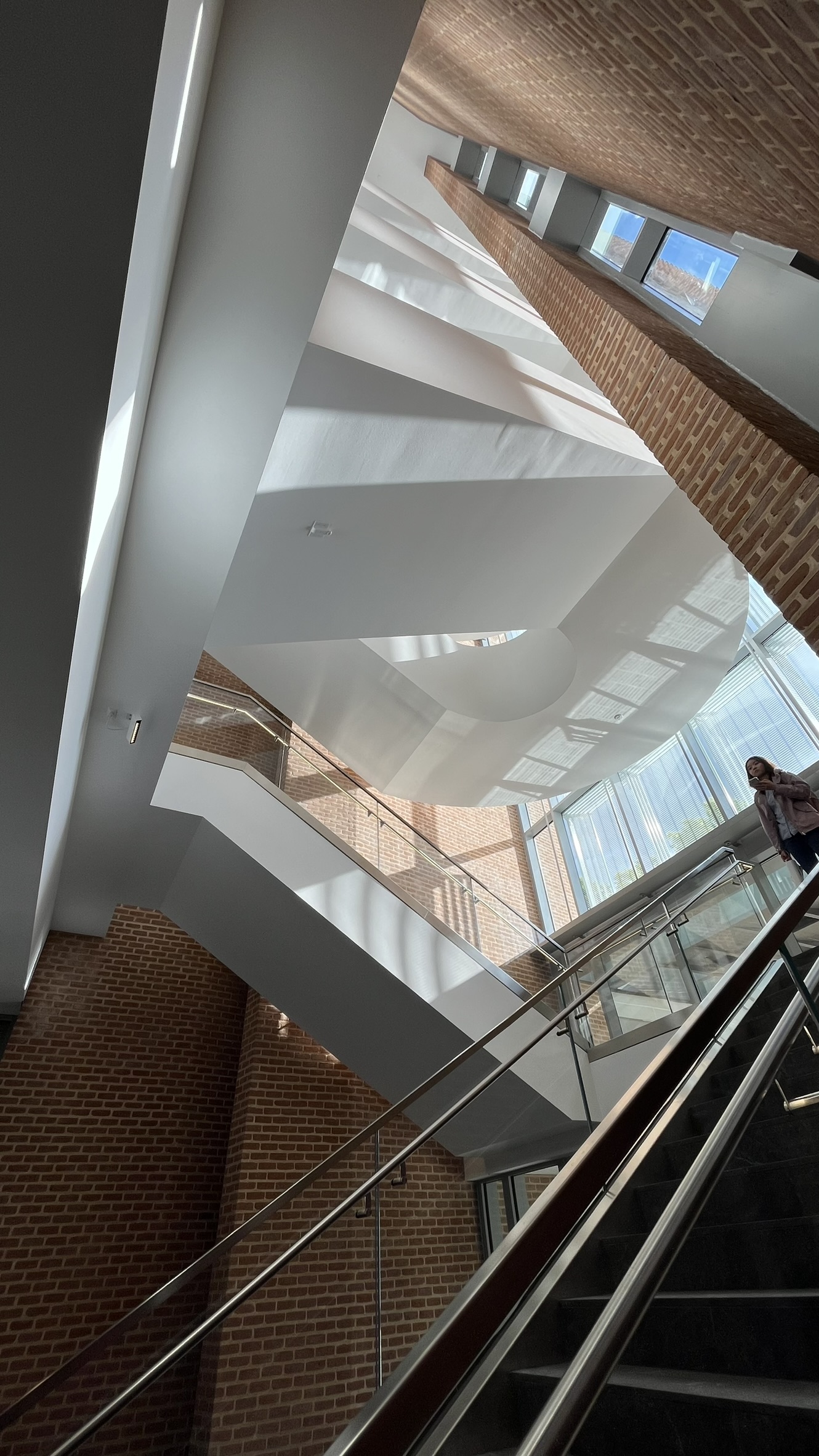
Communicating / Egress Stair To promote interaction across all floors, the stair tower and the central hub connect a series of stepped double-height collaboration areas. Intimate conference rooms and break areas with warm materials providing ample opportunities for informal learning and connection. A cantilevered ‘horseshoe’ shaped stair connects all floors and allow users to enjoy views towards the Engineering Quad and the campus beyond.
Program Activating Spaces
Ground-floor activation and the central hub are supported by a thoughtfully integrated program that includes a registrar’s classroom, a café, and break areas on each floor. These social and circulation spaces form a connective system that fosters interaction, encouraging spontaneous encounters between students and faculty. By facilitating moments of dialogue and exchange, the design aims to cultivate a vibrant atmosphere that supports collaboration and sparks innovation.
Registrar’s Classrooms
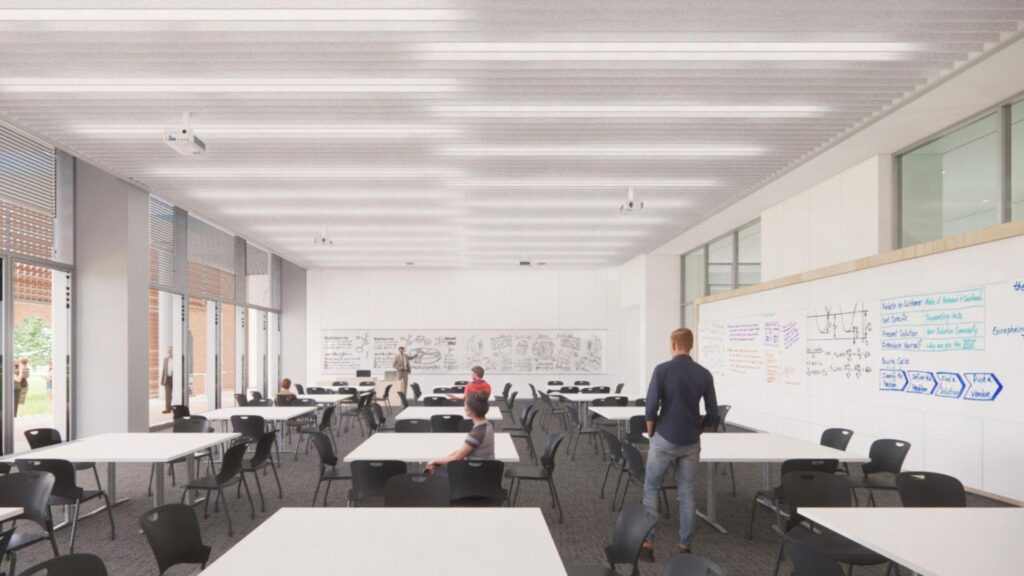
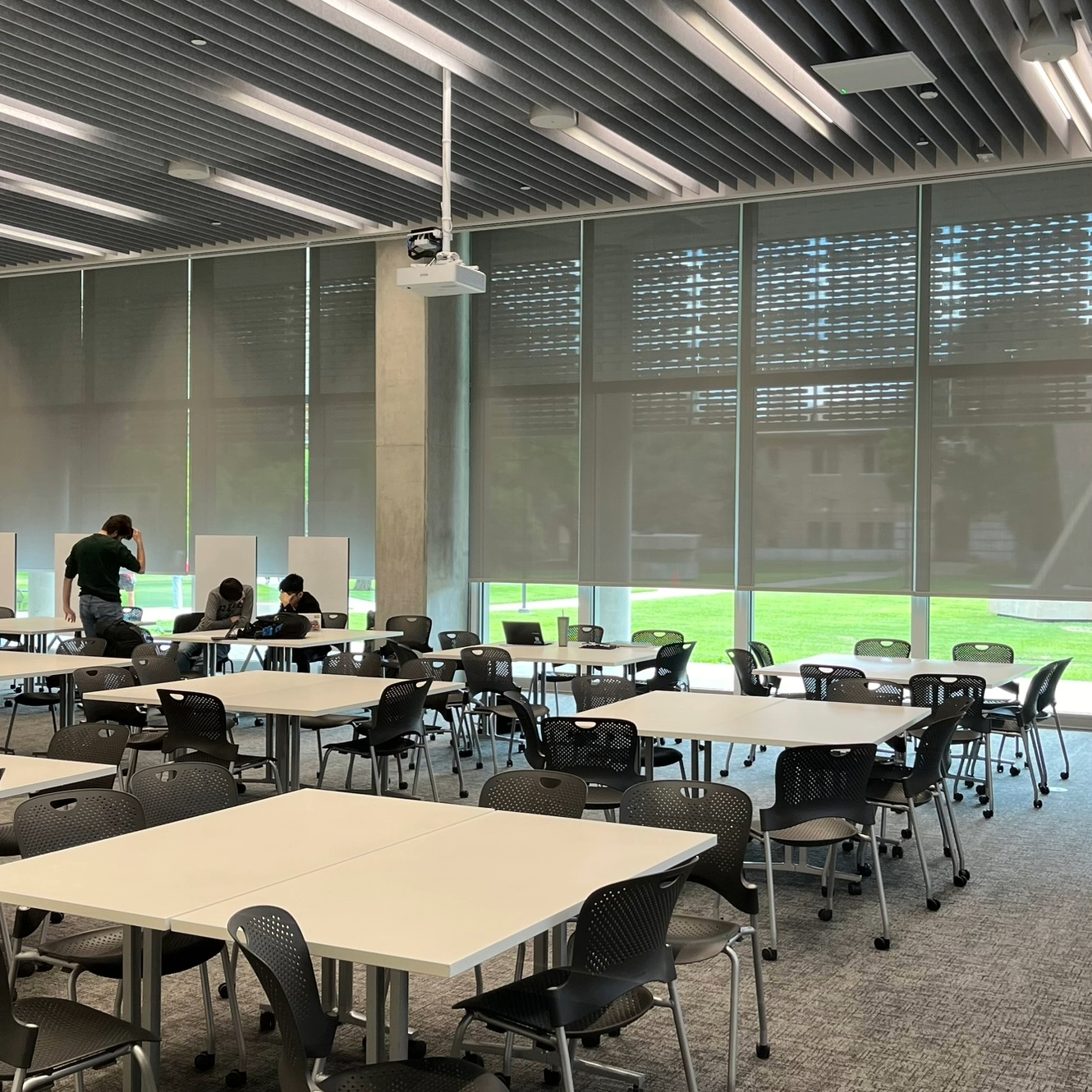
Creating a bright and engaging setting for learning, the Registrar’s Classrooms draw in natural daylight through the arcade and frame views of the Engineering Quad. Each classroom is equipped with screens, projectors, and integrated AV systems to accommodate a range of teaching styles. These elements are discreetly built into the walls and baffled ceiling to reduce visual clutter, ensuring a focused and adaptable environment for both students and instructors.
The Café
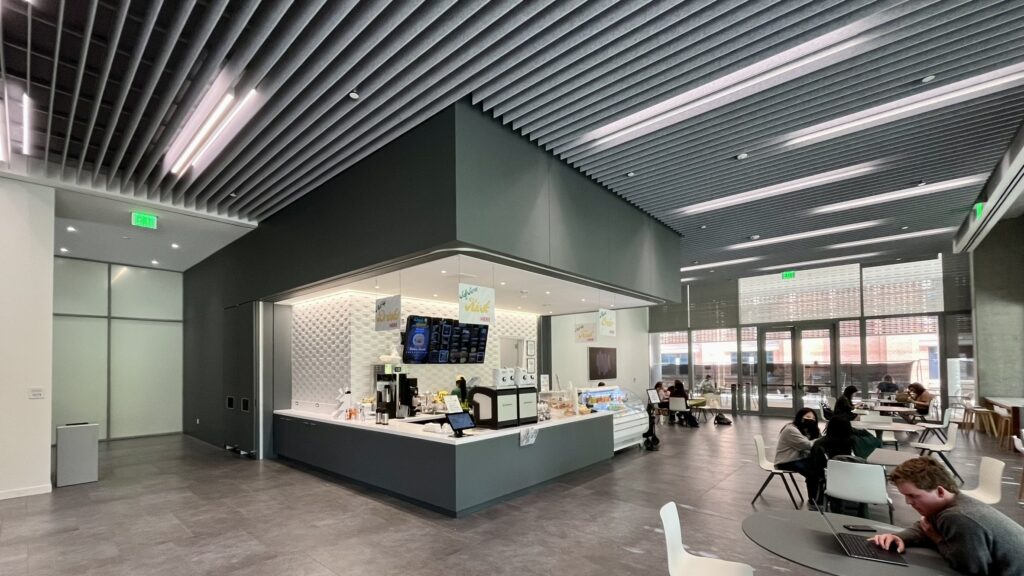
Accessed from the adjacent Engineering Quad and the central hub at the ground level, the cafe is designed as a simple volume within a larger open space with the servery and back-of-house centrally located to allow circulation and seating to flow around them. This arrangement creates multiple points of access and opens directly to the arcade, café terrace, and the quad beyond, encouraging movement and interaction throughout the day.
Offices and Labs
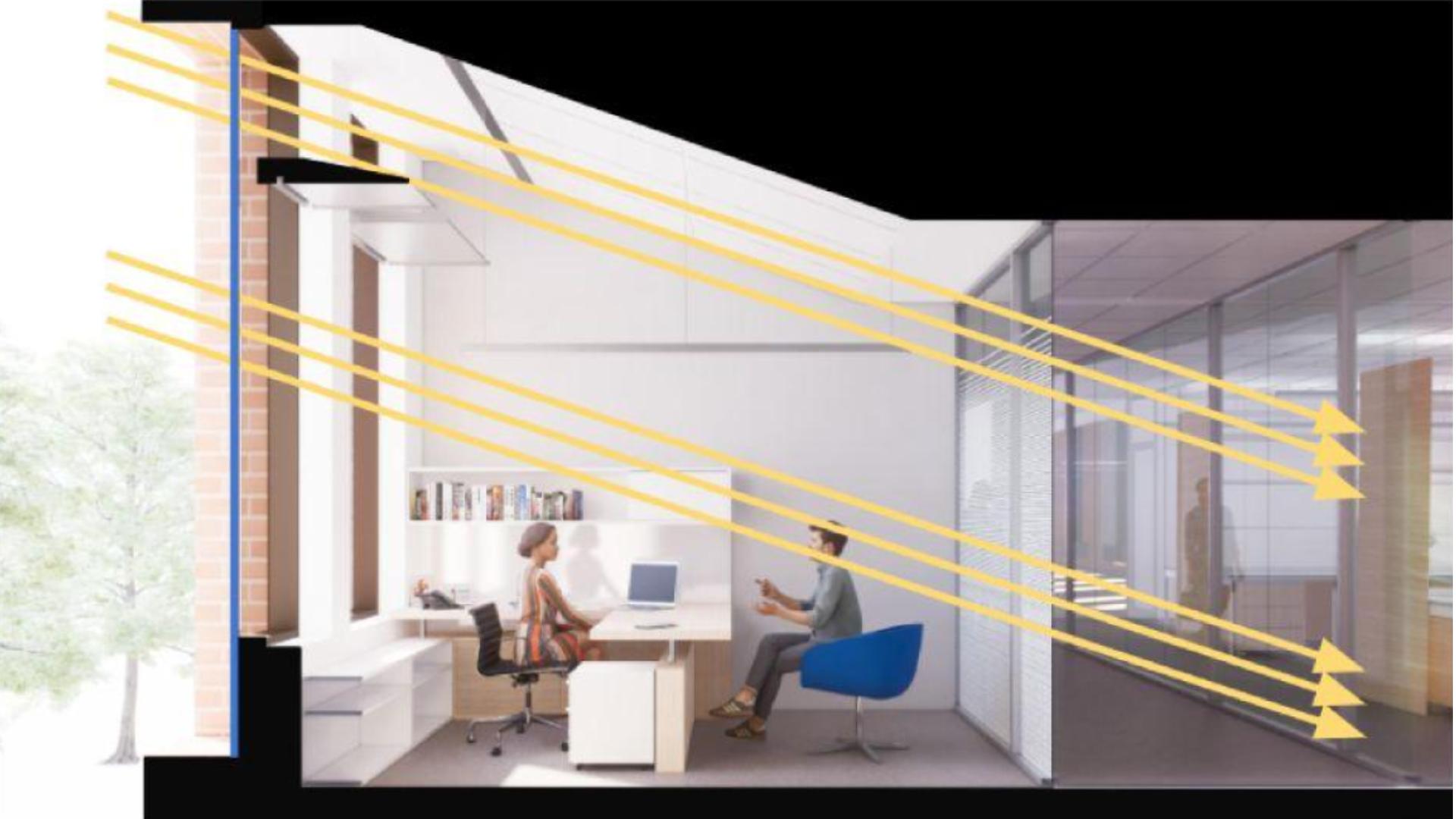
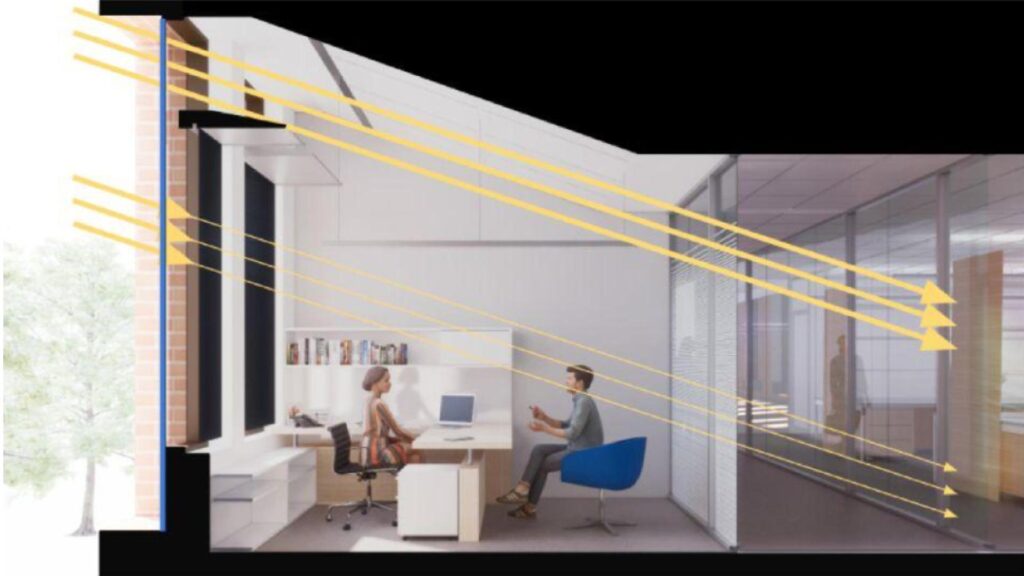
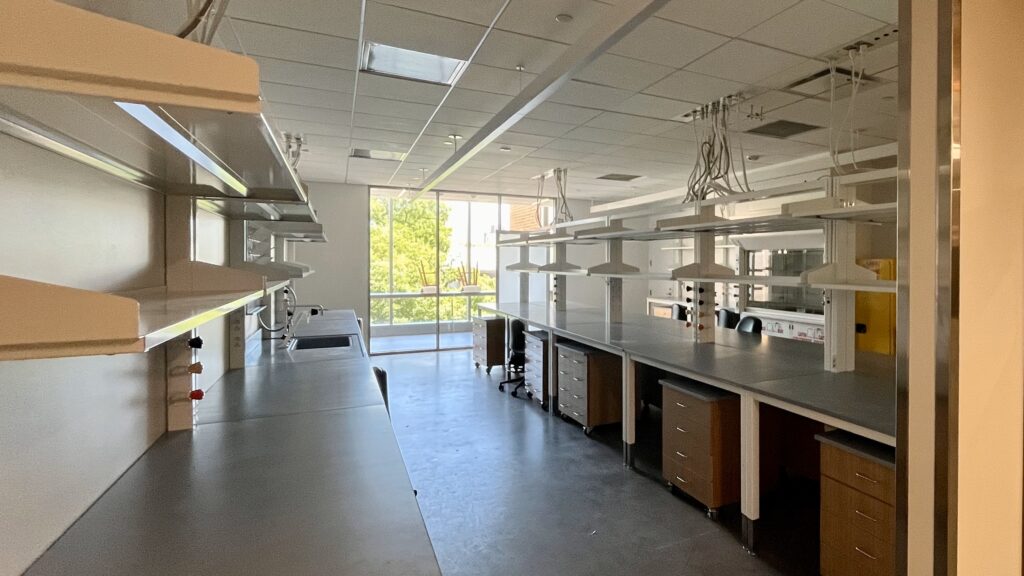
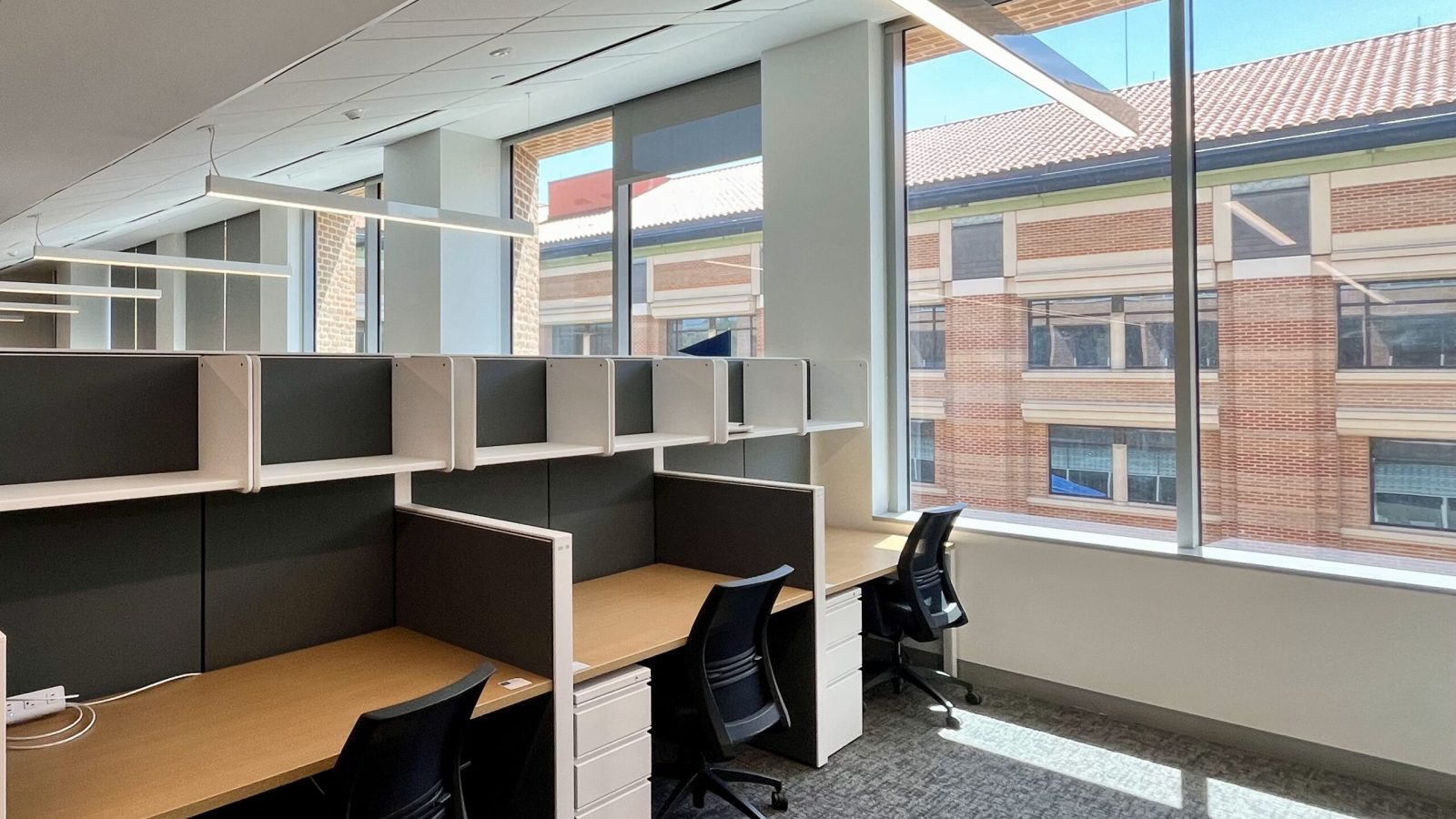
The research scientists desired access to daylight from their offices and laboratories to connect with nature and improve wellness. Tilting the ceiling at the perimeter and adding interior glass walls at the labs allowed for daylight to penetrate further into the space, providing 38% more daylight than a conventional flat ceiling.
Daylight maximized into offices, corridors and labs with shaped ceiling.
Daylight allowed to penetrate above offices to corridor and labs with the shades down.
Brick Facade
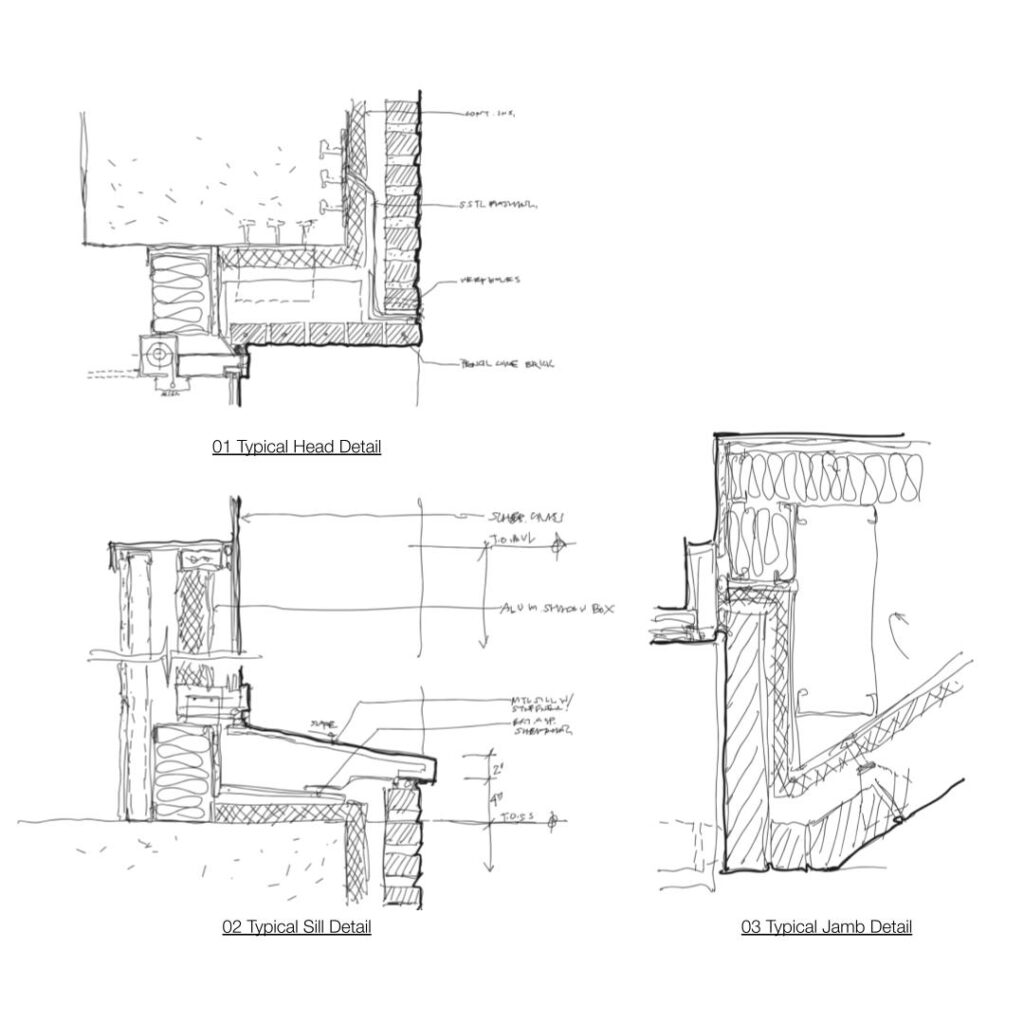
The delicate brick wall design is closely aligned with interior performance goals; reducing glare, optimizing the window-to-wall ratio for energy efficiency, and framing views of the campus. Development of the brick façade required careful detailing to ensure durable support for the masonry units, minimize long-term maintenance, and achieve a balance between performance, aesthetics, and cost.
Acknowledgements
From initial programming and concept design in late 2020, construction document submission by early 2022, through construction completion and occupancy by September 2023, the Rice University O’Connor Engineering and Science Building (OESB) was a fast-paced, ambitious, and highly collaborative effort. By Spring of 2024, seeing the Engineering Quad newly activated and students fully engaged with the space was especially meaningful. Designed and delivered during the challenges of the pandemic, the project reflects the team’s resilience and dedication.